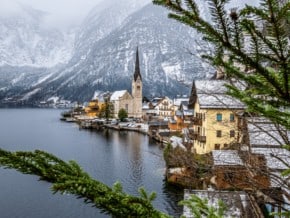
I’m not a fan of Europe in winter. Cold, wind, rain, short days—no thanks. But Christmas markets are the exception.
We’ve spent three Decembers in Europe, and there’s something about Christmas markets that makes me willing to tolerate that nasty weather. Give me a mug of glühwein, streets full of lights, and stalls selling things I actually want to look at, and suddenly being outside in December doesn’t seem quite so miserable.
Some markets are much better than others, though. I’ve arranged these by country to make it easier to work them into your travel plans and shared their dates and what makes each one stand out.
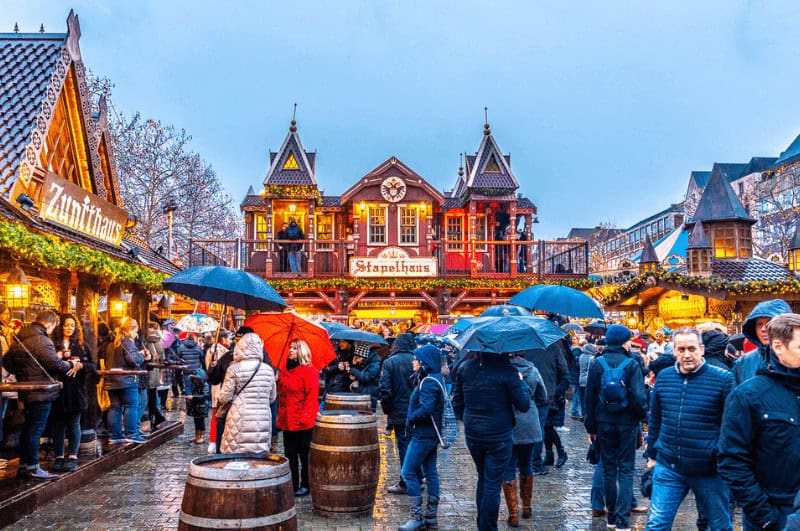
Best Christmas markets in Germany
Ask where to go for European Christmas markets, and the first place most people think of is Germany. The country is home to some of Europe’s oldest Christmas markets, many of which date back to the Middle Ages.
Rothenburg
- Where: Grüner Markt, 91541 Rothenburg ob der Tauber
- When: November 20 – December 23, 2026
- Hours: Mon – Thu: 11:00 am – 7:00 pm, Fri – Sun: 11:00 am – 8:00 pm
- Website: https://www.rothenburg.de/en/erleben/veranstaltungen/weihnachtsmarkt-/-reiterlesmarkt
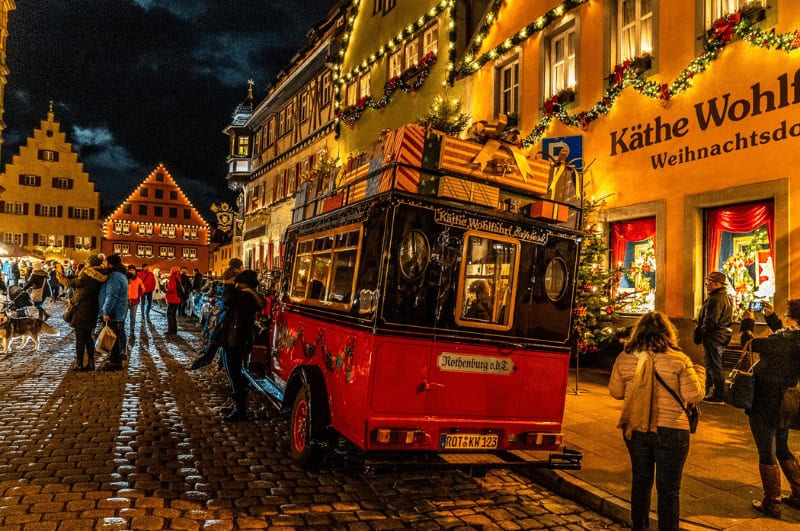
Rothenburg ob der Tauber is one of Germany’s best-preserved medieval cities, and honestly, it doesn’t need much help looking the part. Its Christmas market dates back to the 15th century, and once the stalls go up around the old town, it really does feel like you’ve landed in another century. Around twilight, when the sky turns that deep winter blue, the whole place looks even more dramatic
If your schedule allows it, stay overnight instead of treating Rothenburg as a day trip. We stayed for two nights after friends in Cologne told us it was one of their favorite places to visit at Christmas. Once the tour buses leave, the locals get the streets back. Rothenburg is a whole lot more fun to wander around without all the tourists.
Once the crowds thin out, it’s a lot easier to actually browse and start noticing the good stuff: hand-painted Polish pottery, nativity scenes carved from Bethlehem olive wood, and lighted porcelain houses based on Rothenburg’s own buildings.
If you’d like to try a traditional local snack while you’re here, you should try a Schneeball. It’s a loosely woven ball of shortcrust strips that’s been deep-fried and dusted with powdered sugar. Some of the modern versions come dipped in chocolate, nuts, or marzipan.
While you’re in Marktplatz, time it for the top of the hour to watch the figures on the Meistertrunk clock spring into action. They reenact the legend of a 17th-century mayor who supposedly downed an enormous tankard of wine in one sitting to save Rothenburg from destruction.
Cologne
Cologne has several Christmas markets, and they each have a completely different feel. We’ve been to three of the main ones: the Cathedral Market, Heinzels Winter Fairytale, and Angel’s Market.
Cologne Cathedral Christmas Market
- Where: Roncalliplatz 1, 50667 Köln, Germany
- When: November 22 – December 23, 2026
- Hours: Sun – Wed: 11:00 am – 9:00 pm, Thu – Fri: 11:00 am – 10:00 pm, Sat: 10:00 am – 10:00 pm
- Website: https://www.koelnerweihnachtsmarkt.com/en/
Cologne Cathedral is one of the few structures in the city that survived WWII bombing raids almost untouched. Allied pilots reportedly used its twin spires as a navigation landmark while much of the neighborhood around it was leveled.
The Christmas market sits right beneath those Gothic spires, and the first time I visited, I was struck by just how much the setting affects the atmosphere. This market feels big, dramatic, and steeped in history.
Once you get past the cathedral, the red-roofed stalls are packed with handmade ornaments, candles, wooden crafts, and enough German Christmas-market food to ruin your dinner plans.
If you’re hungry, try the reibekuchen. They’re fried potato pancakes served with applesauce—greasy and crispy and exactly what you want when it’s cold outside.
Heinzels Winter Fairytale
- Where: Alter Markt and Neumarkt Shopping District
- When: November 27, 2026 – January 3, 2027
- Hours: Sun – Thu: 11:00 am – 9:00 pm, Fri – Sat: 11:00 am – 10:00 pm
- Website: https://www.heinzels-wintermaerchen.de/en/homepage/
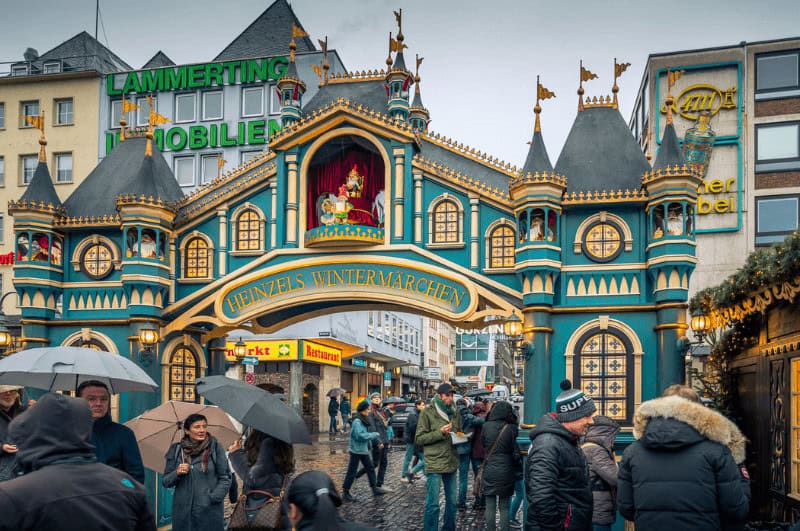
Set in Cologne’s Altstadt (old town), the Heinzels Winter Fairytale market is inspired by the Heinzelmännchen, legendary gnomes who supposedly helped Cologne’s craftsmen—until a curious housewife ruined their magic.
The atmosphere here is bigger and livelier than Neumarkt but more story-driven than the Cathedral Market. It stretches across Alter Markt and Heumarkt, with ice skating, live performances, and games alongside traditional stalls.
If food is your priority, this market has some of the best mulled wine in the city. Some stalls offer versions with extra spices, honey, or fruit, which makes it more interesting than the standard stuff.
Angel’s Market
- Where: Neumarkt Shopping District
- When: November 22 – December 23, 2026
- Hours: Sun – Thu: 11:00 am – 9:00 pm, Fri – Sat: 11:00 am – 10:00 pm
- Website: http://www.markt-der-engel.de/ (German only)
Held at Neumarkt Square, Markt der Engel (Angel’s Market) is Cologne’s oldest Christmas market, and it’s different enough from the Cathedral Market and Heinzels to be worth a stop. Instead of gnomes or Gothic spires, this one has fairy lights, delicate decorations, and a much softer feel.
The market’s theme is, of course, angels. You’ll see them everywhere, hanging from stalls, worked into handmade ornaments, and even walking through the crowd in costume. If you’re shopping for Christmas decorations, this is the best market for intricately made glass stars and celestial-themed décor.
Berlin
- Location: Gendarmenmarkt, 10117 Berlin
- Market dates: November 23 – December 31, 2026.
- Hours: Sun–Thu 11:00 am–10:00 pm; Fri–Sat 11:00 am–11:00 pm; Christmas Eve 11:00 am–6:00 pm; New Year’s Eve 11:00 am–midnight
- Admission: €2. Free Mon–Fri, 11:00 am–2:00 pm, except Dec 24, 25, 26, and 31. Children under 12 are free.
- Website: https://weihnachtsmarkt-berlin.de/welcome
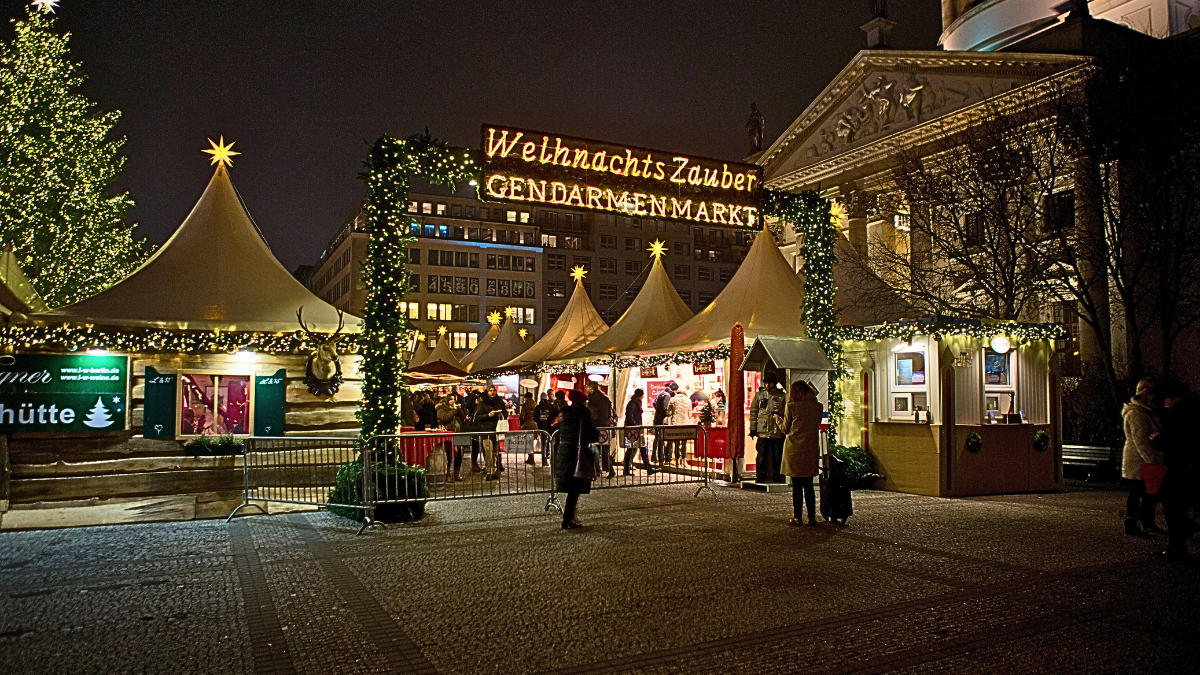
Berlin has no shortage of Christmas markets, and we visited several of them. WeihnachtsZauber at Gendarmenmarkt is the one I’d choose if you only have time for one.
It’s one of the few that charges admission, though it’s only €2, and weekday entry is free for a few hours around lunchtime. The emphasis here is less on rides and more on crafts, food, and entertainment.
The biggest difference is the shopping. This market puts a real emphasis on handmade goods, and some of the craftspeople actually work in front of you. That makes it a much better place to look for something interesting to take home instead of another mass-produced Christmas ornament.
There’s also a full entertainment program with musicians, choirs, dancers, acrobats, and other performers. Food goes well beyond Bratwurst and glühwein, too; some of the vendors serve proper meals as well as the usual market snacks. There are heated dining tents, but good luck finding a seat when the place is busy—we never could.
Munich
- Where: Marienplatz, 80331 München, Germany
- When: November 20 – December 24, 2026
- Hours: Mon – Fri: 10:00 am – 9:00 pm, Sat: 10:00 am 10:45 pm, Sun: 10:00 am – 8:00 pm
- Website: https://www.muenchen.de/en/events/munich-christkindlmarkt-info-about-christmas-market
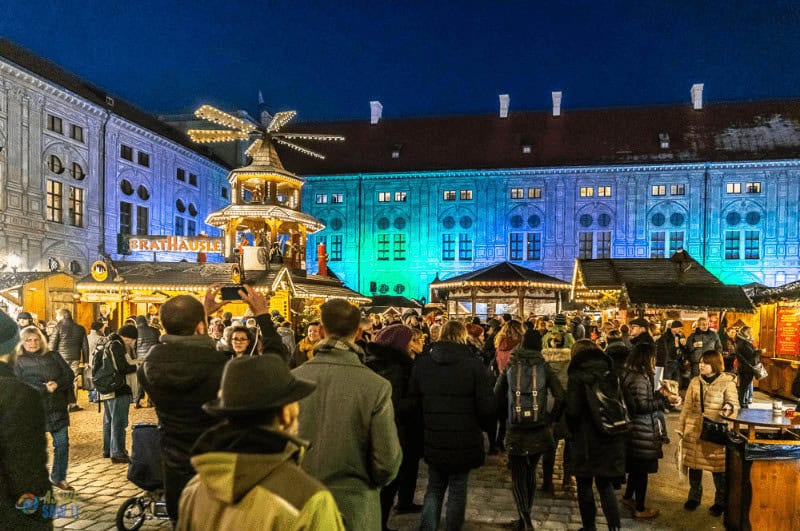
Munich deserves a spot on this list because the city has more than a dozen Christmas markets, and they’re not all variations on the same thing. The main one, Münchner Christkindlmarkt at Marienplatz, is the city’s largest and oldest, with a huge Christmas tree and live Advent music from the Town Hall balcony most evenings.
We made a point of visiting as many as we could.
One that really stood out was the medieval market at Wittelsbacherplatz. The vendors dress in period costumes, which makes the whole thing feel completely different from Marienplatz. It’s also where we first tried Feuerzangenbowle—mulled wine with a rum-soaked sugarloaf set on fire above the glass so the melted sugar drips into the wine. Hard to say no to that.
We almost always seemed to pick up a bag of gebrannte Mandeln, too. Those warm candied almonds are everywhere at German Christmas markets, and the smell makes them almost impossible to resist.
Best Christmas markets in France
Strasbourg
- Where: Grande Île
- When: November 27 – December 24, 2026
- Hours: Mon – Fri: 11:00 am – 8:00 pm, Sat – Sun: 11:00 am – 9:00 pm
- Website: https://noel.strasbourg.eu/en
Sometimes called Christkindelsmärik and sometimes Marché de Noël à Strasbourg, Strasbourg’s Christmas market dates back to the 16th century. That makes it one of the oldest Christmas markets in Europe.
The market spreads across the Grande Île, Strasbourg’s historic center and a UNESCO World Heritage site. More than 300 wooden chalets fill the squares and streets around the old town, with a huge Christmas tree at the center. You’ll find Christmas decorations, handmade toys, pottery, glass jewelry, and plenty of other gifts.
Strasbourg also has the advantage of Alsatian food, which gives this market a flavor of its own. Try flammkuchen, a thin, crisp Alsatian specialty with crème fraîche, onions, and lardons. Vegetarian versions are easy to find, too. Or if you’re craving something sweet, look for bredele, small buttery Christmas biscuits that come in flavors such as almond, lemon, and honey.
Best Christmas markets in England
Bath
- Where: Bath Abbey (city center)
- When: November 26 – December 13, 2026
- Hours: Mon-Wed: 10:00 am – 7:00 pm, Thu – Sat: 10:00 am – 8:00 pm, Sun: 10:00 am – 6:00 pm
- Website: https://www.bathchristmasmarket.co.uk/
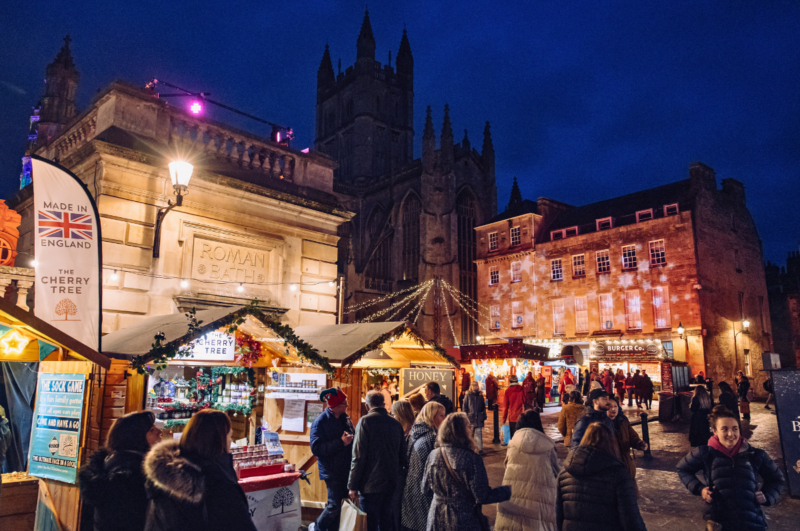
The Bath Christmas Market fills the streets around Bath Abbey with more than 200 wooden chalets, so you’re shopping right in the middle of Bath’s UNESCO World Heritage city center. Between the Abbey, cobbled streets, and Georgian buildings, it’s a pretty good backdrop for a Christmas market. Not a bad place to be stuck outside in December.
Bath’s Christmas market has a distinctly British feel. Most of the stallholders come from Bath and the surrounding region, and much of what they sell is made in the UK. Look for handcrafted decorations, candles, soaps, jewelry, and personalized gifts instead of the same souvenirs you could probably buy in five other cities.
The food is just as tempting: local cheeses and chocolates, mince pies, caramelized nuts, mulled wine, hot chocolate, and warm spiced cider. Basically, enough sugar and alcohol to make the cold considerably less offensive.
One nice thing about Bath is that the market is only about a five-minute walk from Bath Spa station, so it’s an easy day trip if you’re staying in London or Bristol.
It doesn’t feel cut off from the rest of the city, either. The chalets wind through the historic center from the Abbey Quarter toward Milsom Street, with Bath Abbey and the Roman Baths right in the middle of the area. You’re surrounded by shops, cafés, and Bath’s Georgian architecture instead of being stuck in a separate fairground.
If crowds make you homicidal, aim for Tuesday or Wednesday morning; evenings and weekends are much busier. If you can tolerate the crowds, though, stick around until after dark. The huge Christmas tree in front of Bath Abbey looks especially good once the lights come on, and the market takes on a completely different feel.
Best Christmas markets in Belgium
Brussels
- Where: The center of Brussels
- When: November 27, 2026 – January 3, 2027
- Hours: Daily from 12:00 pm – 10:00 pm; closes at 6:00 pm on December 24 and 31
- Website: https://www.plaisirsdhiver.be/en/christmas-market
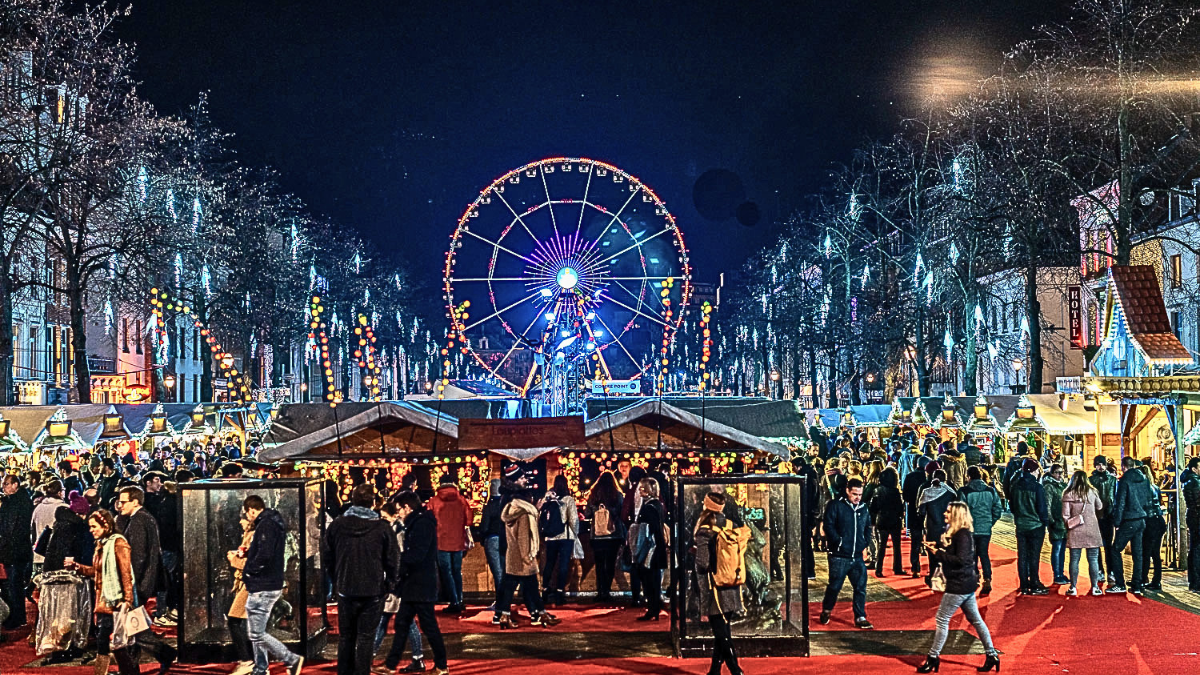
Brussels doesn’t have one compact Christmas market. Winter Wonders spreads across the city center, with more than 200 chalets at Grand-Place, the Bourse, Sainte-Catherine, Marché aux Poissons, Place de Brouckère, and several nearby streets and squares. The official 2026 site lists 238 chalets, so this is one of the bigger Christmas-market events in Europe.
Grand-Place is the part you don’t want to miss after dark. The Christmas tree stands in the middle of the square, and the sound-and-light show projects onto City Hall. The exact 2026 program has not been released yet, but in 2025 the show ran every 30 minutes in the evening.
The bigger attractions are spread beyond Grand-Place. Winter Wonders has a 55-meter Ferris wheel, merry-go-rounds, a covered ice rink, and curling lanes, so it feels more like a citywide Christmas festival than a row of market stalls around one square.
The food is just as much a reason to go. Look for fries with mayo, baked salmon, forest mushrooms, Belgian waffles, crepes, nougat, yule log cake, and plenty of Belgian chocolate. Pop-up bars sell a wide range of Belgian beers, and you’ll also find jenever, Belgium’s national spirit. It’s a grain-based liquor flavored with juniper and is often compared to gin.
Best Christmas markets in Austria
Salzburg
- Where: Residenzplatz
- When: November 19, 2026 – January 1, 2027
- Hours: Sun – Thu: 10:00 am – 8.30 pm, Fri – Sat: 10:00 am – 9:00 pm
- Website: https://christkindlmarkt.co.at/en/
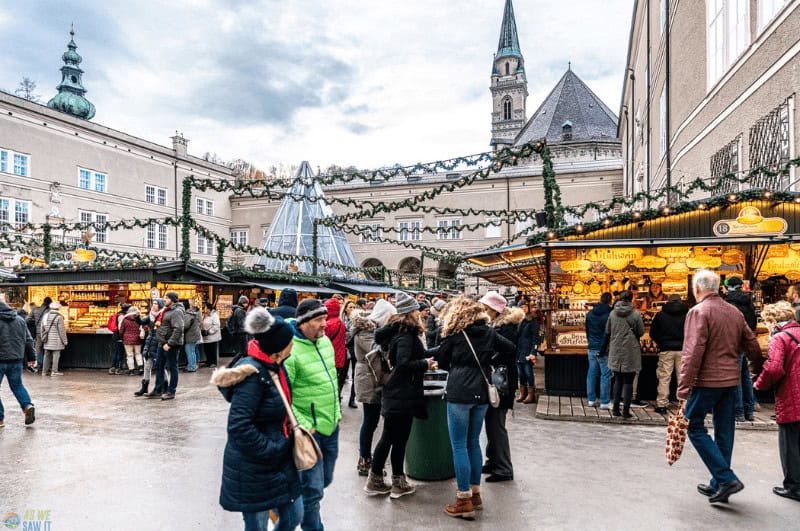
Salzburg’s famed Christmas market is held in Residenzplatz, in the heart of the historic center. Each year, around 100 wooden stalls sell handmade gifts, Christmas decorations, and plenty of things to eat.
You’ll find music boxes, nutcrackers, dolls, wooden toys, jewelry, glass-blown figures, incense, and candles. If you’re shopping for Christmas decorations or gifts, there’s plenty here that doesn’t look like it came off an assembly line.
There’s usually something going on besides shopping, too. Sing-alongs, Christmas story readings, and Krampus parades rotate through the schedule, and musicians perform from the balconies overlooking Residenzplatz.
If you’re hungry, look for a bowl of goulash or a bauernkrapfen, a fried Austrian pastry. And if you’ve already had enough glühwein to last a lifetime, try jagatee, a hot Austrian drink made with black tea, rum, and spices.
Vienna
Winter in Vienna is simply magical. Austrians seem to enjoy turning the city into a fairytale winter wonderland.
Wiener Christkindlmarkt
- Where: Rathausplatz (Vienna City Hall)
- When: November 13 – December 26, 2026
- Hours: Sun – Thu 11:00 am – 9:00 pm Fri – Sat 11:00 am – 10:00 pm
- Website: https://www.christkindlmarkt.at/en/the-market/
Among Vienna’s many Christmas markets, the one in front of City Hall at Rathausplatz is the most popular.
More than 150 stalls sell everything from candles and pottery to fashion accessories and schnapps—lots of schnapps. There’s also an ice rink, a Ferris wheel, and an old-fashioned carousel.
As usual, there seems to be no end to the food stalls. This is no place to be watching your waist. The smell of roasted chestnuts, sugar apples, and Christmas punch drifts through the market, and we had a hard time deciding what to try first.
Schönbrunn Christmas Market
Where: Schönbrunn Palace, Schönbrunner Schloßstraße 47, 1130 Vienna
When: November 6, 2026 – January 6, 2027
Hours: Nov 6–Dec 23: 10:00 am–9:00 pm; Dec 24: 10:00 am–4:00 pm; Dec 25–Jan 6: 10:00 am–7:00 pm
Website: https://www.weihnachtsmarkt-schoenbrunn.at/en
Of all the Christmas markets in Vienna, Schönbrunn had to be my favorite. It’s set right in the courtyard in front of the palace, so before you’ve bought a thing, it already has one heck of a backdrop.
Around 90 stalls sell Austrian handicrafts, Christmas ornaments, carved wooden toys, and plenty of things to eat. Look for Kaiserschmarrn, apple strudel, raclette, and, naturally, the ever-present glühwein. They also hold daily performances, along with workshops and activities for kids, so this is an easy one to spend some time at rather than just taking a quick lap around the stalls.
If you don’t go for any other reason, go for the mug. It’s actually porcelain, not plastic, and there’s a beautiful line drawing of Schönbrunn Palace on it. They told us we could have returned them and gotten the deposit back, but that was never going to happen. They came home with us.
What I remember most, though, is the setting. Schönbrunn is impressive enough on its own, but add Christmas lights, rows of market stalls, and a hot drink in your hand, and it becomes a pretty good argument for putting up with Vienna in December.
If you plan on visiting the palace—which closes at 5—time it so you can enjoy the market after dark. This is one market that gets better when the lights come on.
Best Christmas markets in Czech Republic
Prague
Czechia’s capital has a few smaller markets spread around the city as well as a Christmas market at Prague Castle. But the two best Christmas markets in Prague are just a 5-minute walk from each other.
Old Town Square Christmas Market
- Where: Old Town Square, Prague
- When: November 28, 2026 – January 6, 2027
- Hours: 10:00–22:00 (Dec 24: 10:00–14:00; Dec 25–26: 12:00–22:00; Dec 31: 10:00–15:00; Jan 1: 12:00–22:00)
- Website: https://trhypraha.cz/en
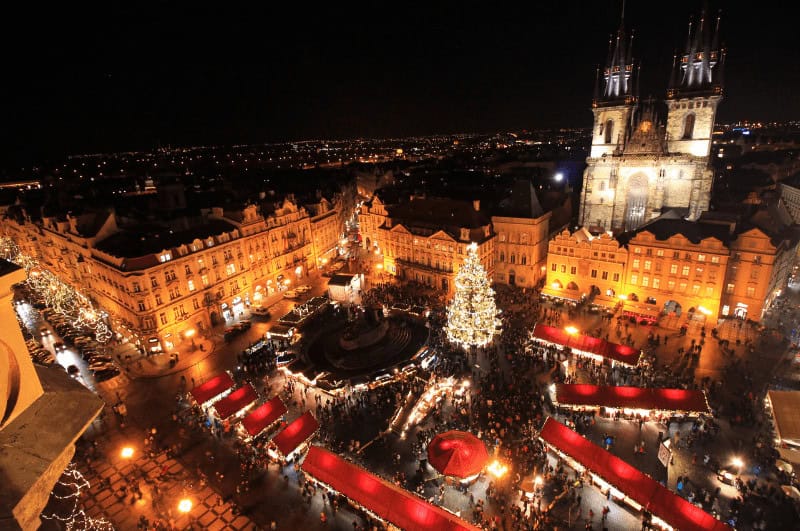
Old Town Square is the bigger and more dramatic of Prague’s two main Christmas markets, wrapped around the Astronomical Clock, Týn Church, and a massive Christmas tree that becomes the centerpiece of the whole square. The medieval setting does most of the work: Gothic spires, historic facades, and one of those places that looks even better once the lights come on.
The stalls lean into Czech crafts: wooden toys, embroidered lace, puppets, dolls, and hand-blown glass ornaments. If you buy glass, ask the vendor to wrap it well.
Food is everywhere. You’ll smell trdelník before you see it. Look for palatschinken (thin crepes with sweet fillings), and for a warm adult beverage, grab svařák (Czech mulled wine), medovina (honey wine), or grog — rum, hot water, lemon, and sugar. It’s simple and exactly what you want when it’s cold.
Wenceslas Square Christmas Market
- Where: Wenceslas Square, Prague
- When: November 28, 2026 – January 6, 2027
- Hours: 10:00–22:00
- Website: https://trhypraha.cz/en
Wenceslas Square is smaller than Old Town Square, but it’s only a few minutes away on foot, so most people treat the two as a single outing. The setting is more modern — long, wide, and lined with shops — but the market still feels festive once the lights come on and the food stalls start steaming.
You’ll see many of the same Czech crafts here: wooden toys, lace, puppets, and glass ornaments. It’s a good place to pick up gifts without fighting the heavier crowds at Old Town Square. Less dramatic, easier to navigate, and perfect for a quick warm drink before heading back toward the historic center.
And yes, this is the Czech Republic. Beer does not disappear just because it’s December.
Best Christmas markets in Croatia
Zagreb
- Where: Zagreb city center
- When: November 28, 2026 – January 7, 2027
- Hours: Daily from 10:00 am – 10:00 pm
- Website: https://www.adventzagreb.hr/en/
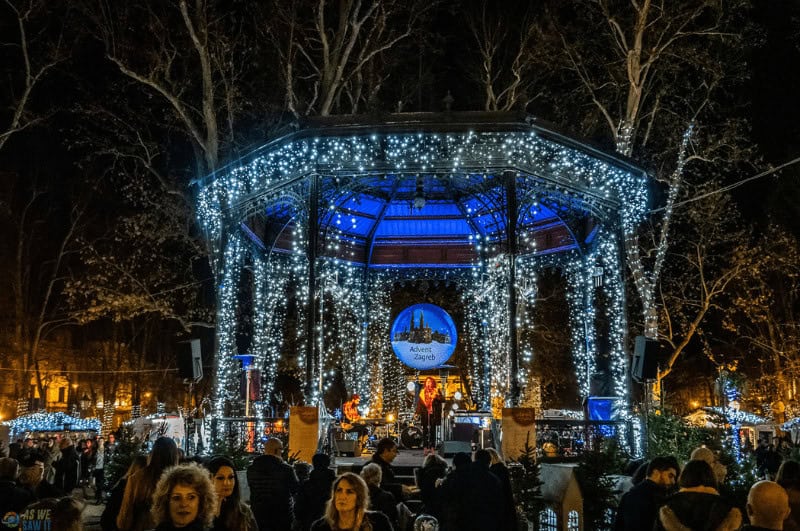
Croatia’s capital really does go all out for Christmas. Advent Zagreb spreads across the city center, with different squares and parks hosting their own markets, music, food, and events. It was even named the best Christmas market in Europe three years in a row.
Ban Josip Jelačić Square is one of the main gathering spots, with a huge Christmas tree, food stalls, drinks, and live music. Over at Tomislav Square, you’ll find the ice rink, which gives that part of the city a completely different feel.
That’s one of the things I liked most about Zagreb. You’d turn a corner and suddenly be in another part of Advent, and each area had its own personality. One might have live music, another might be packed with food stalls, and another would feel more like a traditional Christmas market. There were plenty of gifts and decorations, too, along with some seriously tempting displays of homemade cheeses and smoked meats.
And then there’s the sweet options like medenjaci, Croatian honey-spice cookies, and fritule, cute little fried dough balls dusted with powdered sugar. Can’t forget those.
When the cold starts to get to you, there’s always rakija. It’s Croatia’s most popular spirit, a type of brandy that’s flavored with fruit, herbs, or honey. It comes in a small glass, but don’t let that fool you. Rakija is meant to be sipped—which is probably just as well.
Best Christmas markets in Slovenia
Ljubljana
- Where: Preseren Square
- When: November 27, 2026 – January 3, 2027
- Hours: Mon – Fri: 10:00 am – 10:00 pm, Sat – Sun: 10:00 am – 11:00 pm
- Website: https://www.visitljubljana.com/en/visitors/sights-and-activities/highlights/festive-december-in-ljubljana
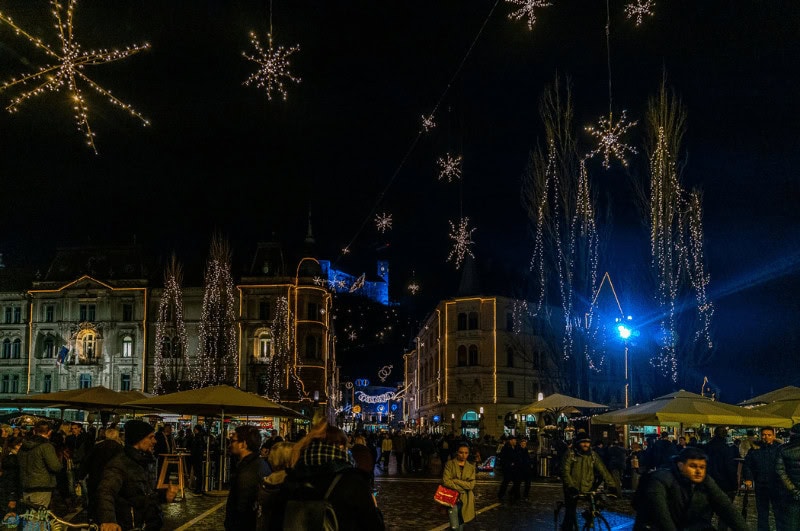
Ljubljana’s Christmas celebration is called Festive December, and the markets spread through the old town and along the Ljubljanica River. Prešeren Square sits right in the middle of it.
The decorations are what I remember most. Lights cover the bridges, buildings, and Christmas trees, and even stretch across the streets between buildings. But along with the usual stars and snowflakes, you’ll see galaxies, planets, comets, and animals, too. The city’s tourism office describes the designs as everything from the tiniest things in the world to the largest. The DNA strands were my favorite.
The stalls sell handmade gifts, holiday souvenirs, hand-knitted gloves and hats, thick wool coats, and plenty of food and drink. Free concerts and other events take place throughout the Christmas season, so there’s usually something going on after dark.
When you get cold, try kuhano vino, Slovenia’s version of mulled wine, flavored tea, or honey schnapps. You can also grab a bag of chestnuts roasted over an open fire. We saw people with some crazy-big sausages, though they looked like a two-person job to me.
Potica, on the other hand, looked a lot more appealing. It’s a traditional Slovenian rolled pastry made from very thin dough, usually with a walnut filling.
Best Christmas markets in Slovakia
Bratislava
- Where: Main Square
- When: November 27 – January 3, 2027
- Opening hours: Daily from 10:00 am – 10:00 pm
- Website: https://www.visitbratislava.com/events/christmas-markets-bratislava/
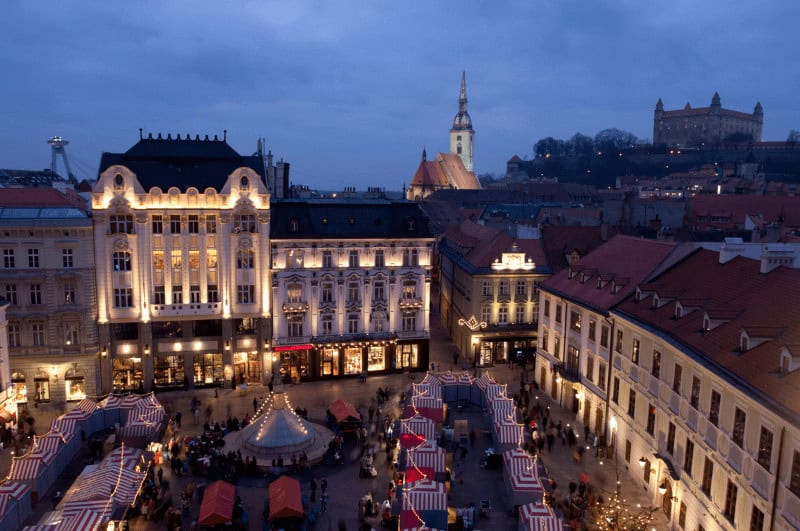
Bratislava’s Christmas markets spread across several parts of the city, but the two largest are Hlavné Námestie (Main Square) and Hviezdoslavovo Námestie. You’ll also find smaller markets at Bratislava Castle, Ružinov, and Eurovea.
Main Square is the one I’d start with. Close to 100 red-and-white stalls sell handmade goods including blown glass, wood carvings, leather products, and beeswax candles. There’s also free entertainment most evenings, ranging from jazz and instrumental music to traditional Christmas carols.
Come hungry. Look for lokša, a dense pancake served with either sweet or savory toppings, or slovenská parenica, a slightly smoky Slovak cheese. For something sweet, go for the rožky pastries or trdelník.
If your hands are freezing, čaj s rumom is exactly what it sounds like—tea with rum. You’ll also find mulled wine and the sweet medovina honey wine.
What to expect at European Christmas markets
Some Christmas markets are small enough to browse in an hour or less. The bigger ones may have skating rinks, carousels, Ferris wheels, live music, and enough going on to swallow an entire afternoon.
One of the first things you’ll notice is that almost everyone is walking around with a mug in hand. There’s a very good reason for that: cold fingers.
Glühwein is the usual fix—hot red wine sweetened with sugar and spices like cinnamon and cloves. If you don’t drink alcohol, or you’re traveling with kids, look for kinderpunsch instead.
Your first drink will cost more because you’re also paying a deposit on the mug. Return it and you get the deposit back. Keep it and, congratulations, you now own another souvenir you’ll have to figure out how to get home.
Most markets treat their mugs as collectibles, with a fresh design introduced each season, and we’ve brought home more than our share. So much for traveling carry-on only.
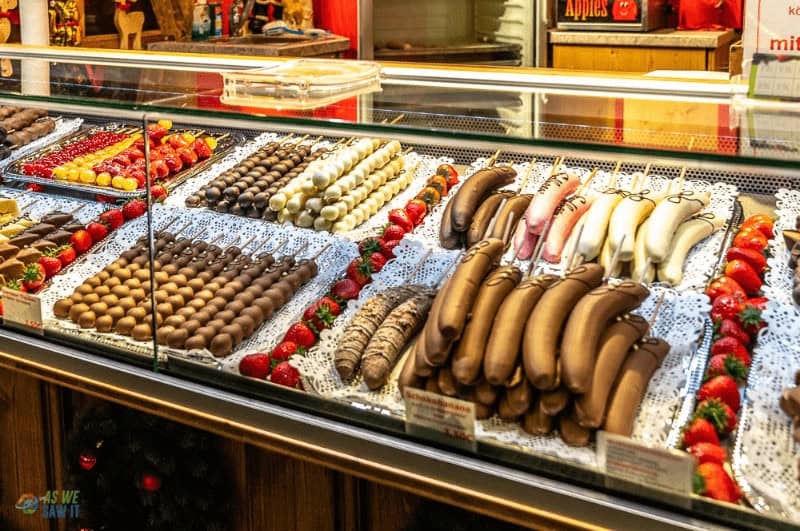
Then there’s the food, which is dangerous because everything smells better when you’re cold. Sausages, potato pancakes, roasted almonds, gingerbread, pastries, hot meals—it’s very easy to convince yourself that “just one more thing” is a perfectly reasonable dinner plan.
The shopping can be just as bad for your self-control. You’ll find ornaments, candles, wooden toys, jewelry, winter accessories, and handmade goods, and at some markets you can watch craftspeople making what they sell. Those are my favorites.
💡 PRO TIP: If you buy anything fragile, ask the vendor to wrap it well. Baggage handlers are not sentimental about Christmas-market souvenirs.
European Christmas Market FAQs
If you’re planning to visit a European Christmas market, here are a few practical things worth knowing before you go.
When do Christmas markets start in Europe?
Most European Christmas markets open in mid to late November, with major cities launching as early as mid‑November. Most markets run through December and many continue into early January, making late November through Christmas the prime time to visit.
Do Christmas markets have entrance fees?
Most Christmas markets in Europe are free to enter, with no ticket or admission fee required. A few specialty or themed markets may charge a small entrance fee, but the majority are open to the public at no cost.
What to wear at Christmas markets in Europe?
Europe is cold in December, so dress warmly. Wear multiple layers and comfortable shoes. You will need a warm coat, scarf, hat, and gloves. Also bring a small backpack or large tote for safely carrying your purchases. Dressing for hours outdoors in freezing or damp weather requires smart layering.
Do Christmas markets in Europe accept credit cards?
Yes, but don’t count on it. Many vendors at larger Christmas markets accept credit cards and contactless payments, but smaller food and craft stalls may be cash-only. Carry some local currency so you won’t have to pass up something you want because the vendor doesn’t take cards.
Final thoughts on Europe’s Christmas markets
I’ll probably never like Europe in winter. I don’t think three Decembers of Christmas markets have done anything to change my opinion of cold, rain, wind, or the sun calling it quits mid-afternoon.
But hand me a mug of glühwein and point me toward a row of Christmas stalls, and suddenly I’m willing to put up with all of it.
If I had to choose only a few, Rothenburg, Cologne, Zagreb, and Vienna would be hard to beat. But that’s part of the problem with European Christmas markets: once you start visiting them, it becomes remarkably easy to find an excuse to add another one to the trip.
💡 Want more winter trip ideas?
In the U.S., we’ve covered the best New England winter getaways, things to do in NYC in winter, warm winter vacations in the USA, and the top day trips from Orlando and Miami.
For Europe, there are the best European Christmas markets, Christmas in Crete, and places to visit in Europe in December. We also have cold-weather guides to Vienna, Munich, Salzburg, Hallstatt, Zagreb, and Ljubljana, plus a winter packing list and a guide to European Christmas food traditions to try.
For winter in the Southern Hemisphere, we’ve covered the best ski resorts in Australia.