
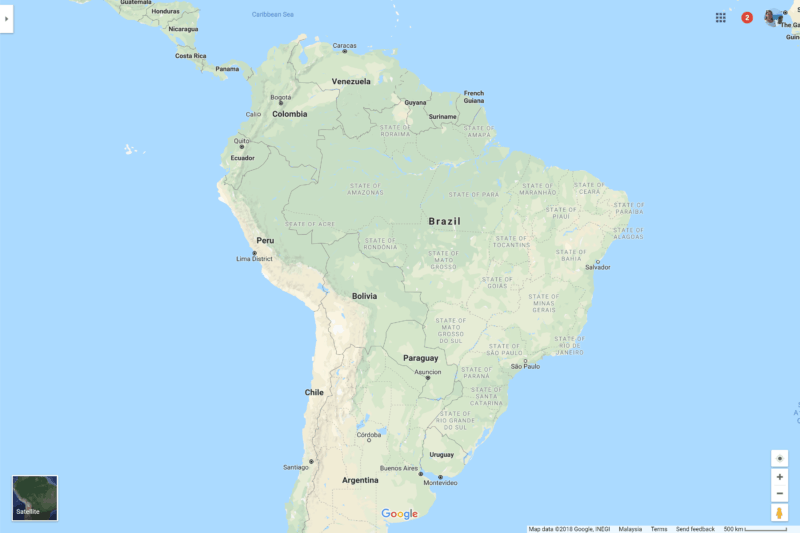
Brazil occupies almost half of the South American continent, the fifth-largest country in the world, and is home to the world’s largest rainforest. If you like both city life and outdoor activities and you’re looking for a vacation that is rich in culture and natural beauty, Brazil is definitely a destination worth considering.
Brazil is also rich in history, with world-class museums and stunning architecture throughout the country. The country is also renowned for its music—it fills the streets, especially during Brazil’s major festivals. And festivals take place all year round.
Vacation time is precious, so we decided to create a travel plan that would fit into a two-week holiday. We’ll admit: It’s hard to choose when there are so many incredible things to do in Brazil. But we think we’ve done it!
Itinerary for two weeks in Brazil
If you are one of the unfortunate people who have a limited vacation period, this itinerary will help you experience a major part of Brazil sites and culture. Trust us: This plan is full of “bucket list” experiences:
- Amazon cruise
- Jaguar jungle safari
- Iguazu Falls
- Rio de Janeiro
Of course, it’s impossible to experience all the amazing nature and culture that the country has to offer in that length of time. But our Brazil itinerary contains the best Brazil highlights, and as a bonus, all four destinations are protected UNESCO world heritage sites.
ⓘ PLANNING TIP: Every two-week vacation includes three weekends. If you leave on a Friday, that means you can have a 17-day holiday and only miss 10 days of work! Our 14-day itinerary was designed to allow plenty of wiggle room for connecting flights.
Getting to Brazil
You’ll be working your way southward on this Brazil itinerary. Plan to fly into Manaus airport (MAO) and depart from Rio de Janeiro (RIO).
Typical flights to Manaus (MAO) often involve a connection, commonly through Miami or Panama City, with total travel time around 14 to 15 hours including layovers. If you’re leaving the U.S. after work on a Friday (around early evening), this means you can expect to land in Manaus on Saturday around midday.
Rio de Janeiro and Sao Paolo are much further south, so if your flight connects through one of those cities, you can expect your travel time to be longer.
Obviously, it all depends on your exact departure city and connection times.
ⓘ BUDGET TIP: Compare the price of a full round-trip fare vs. separate legs. It might be cheaper to book two separate round-trip flights: for example, one from your home airport to Miami, and a second ticket that goes from Miami to Manaus and back to Miami from Rio. If so, make sure there’s enough layover time to navigate U.S. immigration and get to your plane!
Brazil Itinerary Days 1-2: Fly Miami to Manaus, Brazil
The northern town of Manaus might seem like an unusual place to begin an itinerary, but this maximizes every minute of your trip. You’ll waste a lot of sightseeing time if you don’t fly directly to Manaus.
Your overnight flight will land in the morning on Day 2. Welcome to the Amazon River Basin, a UNESCO World Heritage Site. You can’t say you’ve seen Brazil without making a trip to the Amazon River Basin.
Manaus sits 1,000 miles inland, at the point where Rio Negro and the Amazon River meet. The city began as a strategic Portuguese fort, and only grew after they discovered practical uses for the rubber plant, which grows all over the rainforest. The city’s fortunes have risen and fallen since then but today, Manaus is proud to be the home to the only bridge in the Amazon river system, and a new football stadium, used for the 2014 World Cup.
If you have time before boarding your cruise, these are the top attractions in Manaus:
Amazon Theatre
The 700-seat Amazon Theatre (a.k.a. the Manaus Opera House) is Manaus’ landmark. Renovated in 1990, it is a truly opulent piece of Renaissance architecture. It has hosted big name performances from the Italian opera and music world, and is home to the annual Amazonas Film Festival.
Alfandega
Alfandega among the oldest buildings in Manaus. The amazing construction gained recognition as a national historical heritage in the 1800s. It combines elements from renaissance and middle age styles. The architect used bricks imported from England in its construction.
Encontro das Aguas
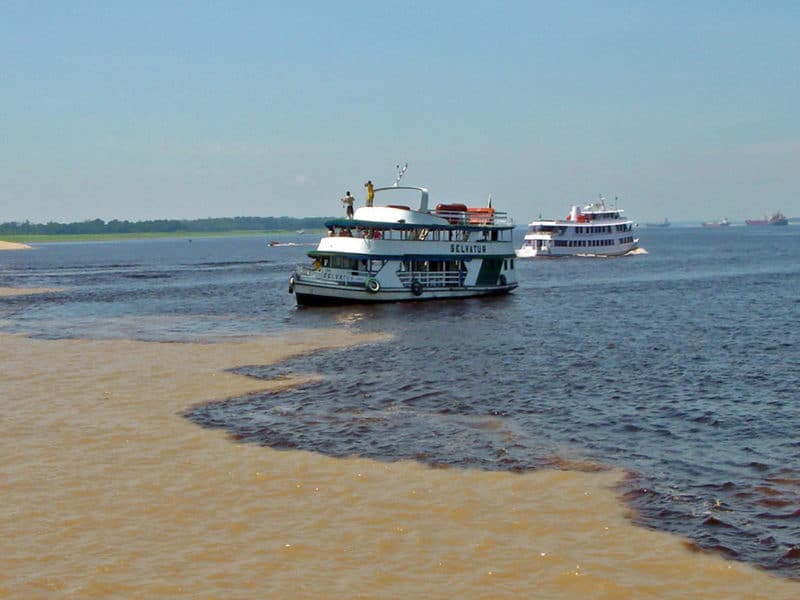
If your cruise itinerary doesn’t include Encontro das Aguas, try to see this phenomenon. Encontro das Aguas, “Meeting of the Waters.” is a popular incredible tourist attraction. where the muddy waters from the Amazon River connect with the dark waters of Rio Negro, which is the largest tributary of the Amazon and the world’s largest black-water river.
Decaying vegetation creates Rio Negro’s black water as it rushes down from the cold Andes Mountains, and it also creates high acidity and little sediment. The muddy Amazon River is the opposite: warm, slow, and full of sand. Thanks to the different temperatures, speeds and densities, their waters stay completely separated for six whole kilometers.
Brazil Itinerary Days 2-5: 4D/3N Amazon River cruise
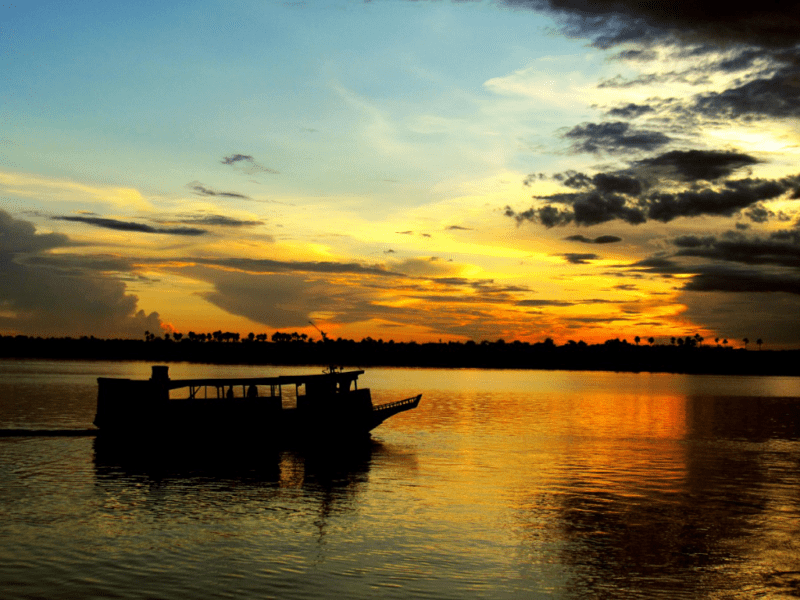
By volume of water, the Amazon is the largest river in the world. It stretches across several South American countries and offers an incredible array of flora and fauna. River cruises allow you to experience it all, with breathtaking scenery and a chance to see it up close in the company of top quality naturalist guides.
Cruises from Manaus begin at the Amazon River and continue along the Rio Negro. You can find cruises that last anywhere from a few hours to a couple of weeks.
ⓘ PLANNING TIP: Fly to Pantanal as soon as your cruise ends, and stay there the night before your tour. Safari departures can be as early as 7:30 am. Check flight schedules here.
What to look for in an Amazon cruise
Ensure the cruise offers land excursions that will take you deeper into the jungle. Some also offer excursions allow you to meet the locals. We visited an Amazon tribe in Ecuador, and it really adds an extra dimension to the entire Amazon experience.
Here are some Brazil Amazon tours you may like:
Brazil Itinerary Days 6-9: Jaguar safari in the Pantanal
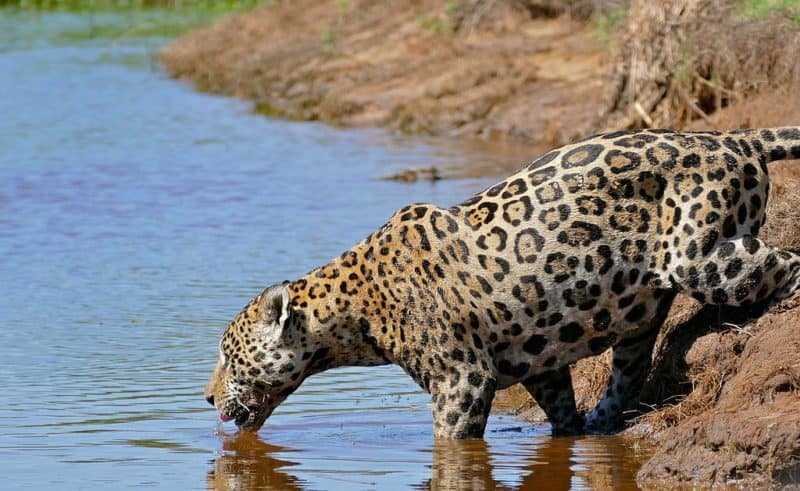
The Pantanal is the world’s largest inland wetland. Jaguars still roam here, and many endangered species call it home, including the South American tapirs, giant anteaters, giant river otters, and the brilliant indigo Hyacinth Macaws. To ensure their safety, a portion of the wetland is protected by UNESCO.
This section of wetland, called the Pantanal Protected Area, is the best place for you to encounter rare wildlife. This is not something you should try to do on your own. You will need to hire professionals for this unique experience, and it’s worth it.
Tips for choosing a Pantanal tour
Jaguar safaris run from both Cuiabá (CGB) and Campo Grande (CGR). This itinerary allows for a 3D/2N eco-tour.
- Campo Grande safaris are for people who consider budget more important than comfort.
- Cuiabá safaris are slightly pricier because they have smaller groups and go into the protected area. You will have a better chance of seeing the star animals.
ⓘ PLANNING TIP: Safaris end late in the day. Stay in a Pantanal hotel after your tour and fly to Iguassu Falls (IGU) the following morning. Search hotels here.
Here are some Pantanal tours you may like:
Brazil Itinerary Days 10-11: Iguassu Falls
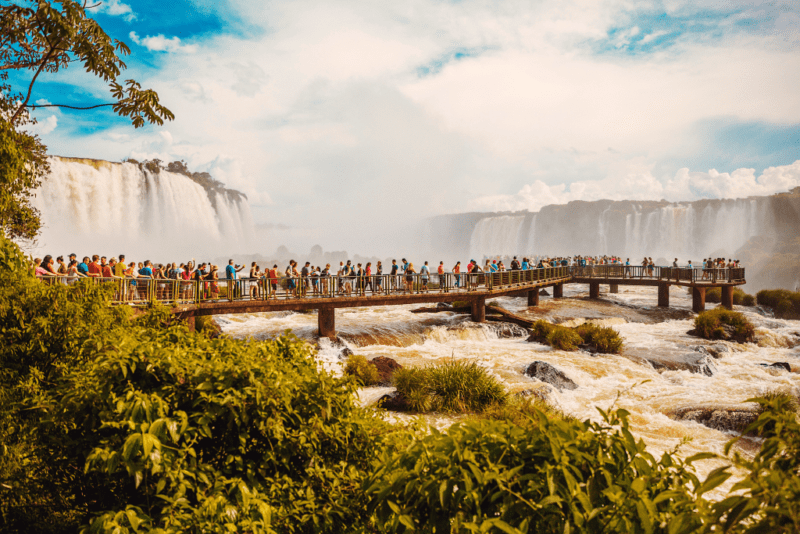
Many travel fanatics consider Iguassu Falls to be the most beautiful waterfall in the world. These waterfalls are located at the exact spot where Brazil, Paraguay and Argentina meet.
You will need to cross the border into Argentina if you want to take a boat or walk around the falls. Photographers will get a more comprehensive sense of its splendor from the Brazilian side.
What to do at Iguassu Falls
After you’ve seen Iguassu’s failing waters, you can explore the town you flew into, Foz de Iguazu. If you prefer hiking, the surrounding jungle is also worth exploring. Iguassu National Park is only a few miles from the falls. Keep your eyes open for the many species of animals and birds in thick vegetation.
Here are some Iguassu Falls experiences you may like:
Brazil Itinerary Days 11-14: Rio de Janeiro

We’ve saved the best for last. The final stop on your 2‑week holiday in Brazil is Rio, the country’s second‑largest city. One look at the iconic statue of Christ with his arms stretched wide and you instantly know where you are.
Rio is famous for its white‑sand beaches and dramatic landscape — mountains dropping straight into the ocean, neighborhoods tucked between cliffs, and a coastline that feels like half the city’s living room. If you want full‑tilt energy, Rio is especially wild during Carnival, when music, parades, and dancers take over the streets and hundreds of thousands of visitors pour into the city.
For help choosing a base, see our guide to Where to Stay in Rio de Janeiro—it breaks down the areas that work best for visitors
What to see in Rio de Janeiro
By the time you reach Rio, you’ve already covered a lot of ground in Brazil, so the last thing you need is a frantic checklist. Rio has more things to do than you could ever fit into a short stay, which is exactly why it makes sense to get the big, time‑consuming sights out of the way in one shot.
One of the easiest ways to cover the essentials is this full-day tour of Rio de Janeiro, which bundles together the big hitters: Christ the Redeemer, Sugarloaf Mountain, lunch, admission tickets, transportation, and hotel pickup. It handles all the logistics and lines for you, so you’re not burning half your trip waiting for tickets or figuring out how to get from one mountain to the other.
Once that’s done, you’re free to enjoy Rio the way people actually enjoy Rio — slow mornings on the beach, wandering the neighborhoods, grabbing a caipirinha when it’s hot, or catching a football match if the timing works. You can spend the rest of your time doing whatever feels good instead of racing around trying to squeeze in “just one more thing.”
Day 14: Fly home
After two weeks in Brazil, full of amazing and unforgettable experiences, it is now time for you to fly home.
ⓘ TIP: Read up on the things you should know before going to Brazil before finalizing your travel arrangements.
We hope you have lots of fun and get loads of amazing photos!
When is the best time to visit Brazil?
High season and Brazilian vacation time coincide: December through March, and July. If you travel just outside of this time, you will find lower prices and fewer crowds.
In particular, you should book your trip when the climate is particularly pleasant. To be honest, this isn’t quite as easy as it sounds. Did you know that Brazil has 5 distinct weather systems?
What is the weather in Brazil?
Here is a general overview of the weather in Brazil:
- Autumn (March-May), and Spring (September-November) are probably the best time to visit Brazil, with comfortable temperatures and moderate rain.
- Summertime (December-February) brings heat and crowds. This is also the wettest time inland, which brings more insects. The Amazon River and Iguassu Falls will be at peak flow, perfect for photography. If you visit now, pack insect repellent and a raincoat.
- Brazilian winter (June-August) can be surprisingly chilly. Bring long sleeves!
Inspired? Pin this post and share it with your friends!