
Taking the train in Italy is one of the easiest ways to get around, especially between the major cities. But if you haven’t used Italian trains before, I’m sure you’ve got questions about how it all works.
So let’s sort that out before you get to the station.
Choose the Right Train
Type in your route on the train operator’s website or app. Be sure you enter the exact station you’re traveling to and from, or the schedules you see won’t be correct. Check whether the journey is direct or requires a transfer.
High-Speed Trains
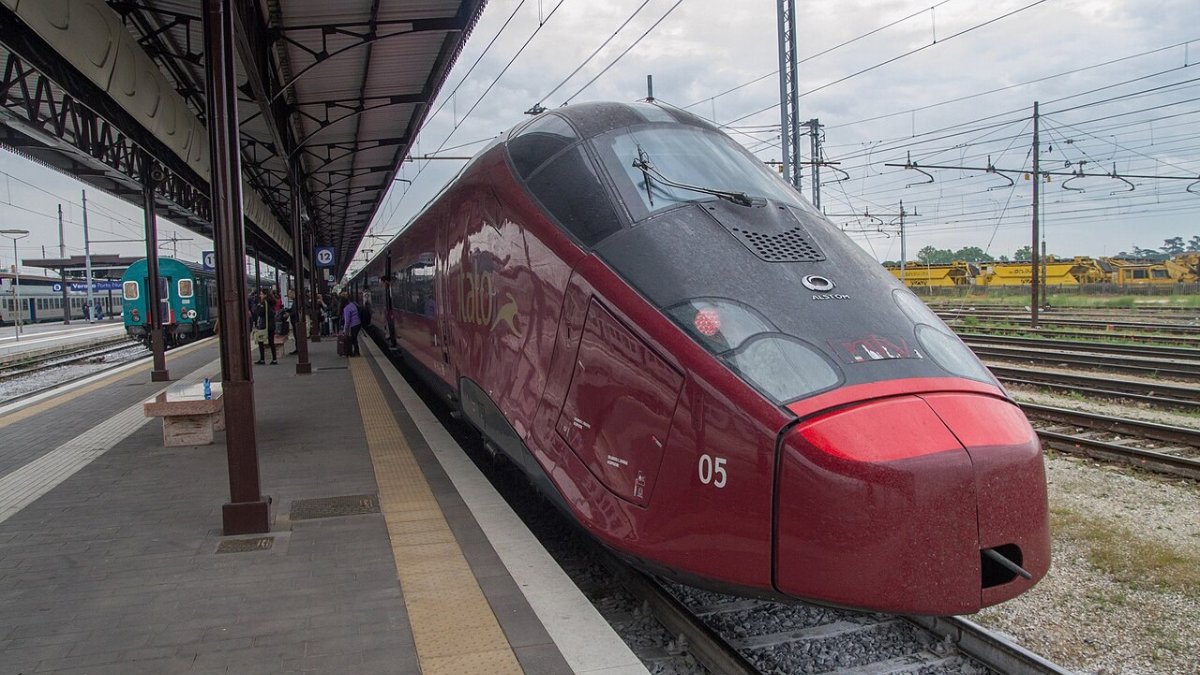
High-speed trains are better for longer distances between major cities. Locations include Rome, Florence, Venice, Milan, Naples and Bologna, and Italy has more than one operator. Regional trains and Italo operate high-speed trains between major Italian cities. For example, you can use the comfortable high-speed rail link from Rome to Venice if that’s part of your itinerary.
High-speed tickets are tied to a specific train and departure time and include an assigned seat. Whether you can change or cancel it depends on which fare you choose.
I usually choose the fastest direct train that fits my schedule, as long as the price difference isn’t unreasonable. It gives me more time for sightseeing and saves me from hauling luggage from one train to another. If a direct train doesn’t make sense, I try to find routes with only one change.
Regional Trains
Regional trains make more sense for shorter journeys and places outside the main high-speed routes. These services are particularly useful for traveling to specific local areas and destinations.
The biggest difference comes with ticketing. Regional travel can involve paper tickets, electronic tickets and digital tickets, each with its own rules. Check the instructions attached to the ticket you actually bought rather than relying on advice for another type.
Buy the Right Ticket
When you’re at a station, use the ticket machines or ticket office. If you’re buying online, use the operator’s website or app. The website or app is especially useful when you already know your travel date and want to compare several departures.
Search using the exact station names, rather than entering only the city. Pay attention in cities with several stations.
Before you pay, check the:
- date and departure time
- departure and arrival stations
- total journey time
- direct route or changes
- fare type and its change/refund conditions
- assigned coach and seat for high-speed travel
Buying a high-speed ticket early can help when you have fixed plans because operators use different fare levels and cheaper fares can sell out.
What to Check on Your Ticket
Once you’ve paid, read the ticket. You need to find your train number, departure time, carriage number, and seat number. You also need to know your departure station, your destination, and any connecting trains you may need to catch along the way.
Remember the train number when you arrive at the station. More than one train may be headed to the same destination within just a few minutes of each other, and you don’t want to board the wrong one.
Verify Your Departure and Arrival Stations
Rome has more than one train station, including Roma Termini and Roma Tiburtina. Venice does too: Venezia Santa Lucia is in the historic center, while Venezia Mestre is on the mainland.
Verify both the departure and arrival stations on your ticket before you head out. In cities with more than one station, choosing the wrong one can put you a long way from where you’re meant to be.
👉 Coming from a cruise? Here’s how to get from Civitavecchia Cruise Port to the train station.
Check Whether You Need to Validate Your Ticket
Validation depends on the type of ticket you bought.
High-speed tickets are tied to a specific train and departure, so you don’t validate them at the station. Paper regional tickets bought at the station generally need to be validated before you board.
If you bought a regional ticket digitally, follow the instructions that came with it. Digital tickets don’t use the paper validation machines, but activation rules can vary by ticket and operator.
Don’t assume every Italian train ticket works the same way. Check the instructions on yours before you board.
Find Your Train at the Station
For your first Italian train journey, I would arrive 20 to 30 minutes early. That gives you time to find the main hall, locate the departure board and get to the platform.
You can walk straight into the station and check the screens. A normal train journey has no airport-style check-in.
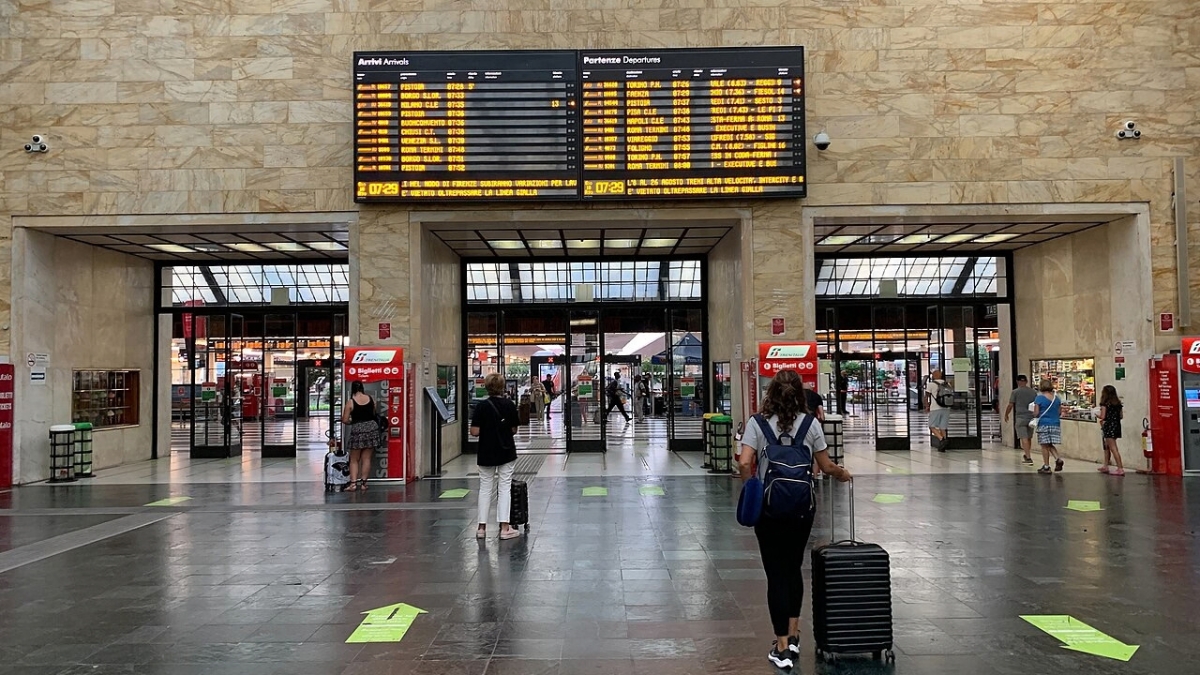
Look for Partenze, which means Departures. Find your train number first, then check the destination, departure time and Binario, meaning platform. Ritardo means Delay.
The platform sometimes appears shortly before departure. Stay near the departures screens while you wait, then follow the platform number when it is posted.
Get on the Train and Find Your Seat
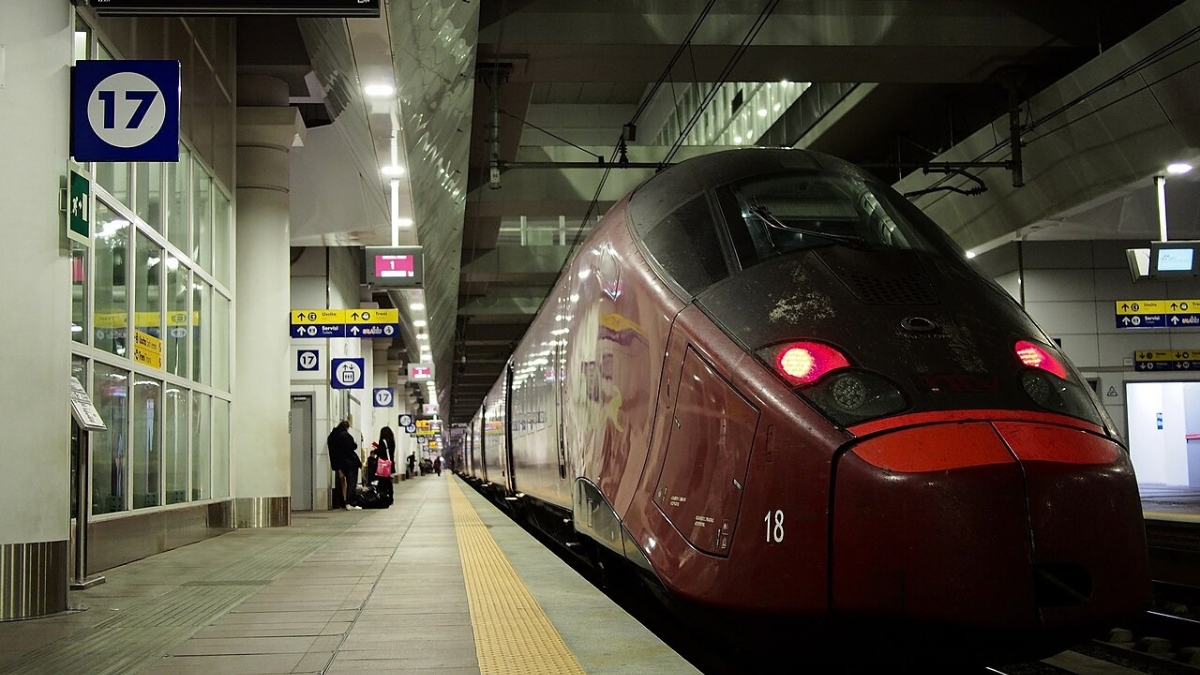
Check the train number once more before boarding. Then look for the coach or carriage number printed on your ticket. At larger stations, signs along the platform may show where different carriages will stop, so position yourself near your coach.
Once aboard, find your seat number and place your bags in the available storage areas. Keep your ticket or QR code open on your phone because the conductor may inspect it during the journey.
What to Do with Your Luggage
There’s no airline-style checked baggage on Italian trains. Your luggage stays with you.
Small bags usually fit overhead or under your seat. Larger suitcases go in the luggage racks or storage areas in the carriage, and those may be several rows away from you.
Luggage rules vary by operator and train type, so check the rules for the train you’re booking if you’re traveling with a very large bag. Italo includes luggage with your ticket, but size limits can depend on the class you book.
Try to keep your passport, wallet, phone, medications, and other valuables with you, especially if your suitcase is stored out of sight.
How to Change Trains in Italy
When you get off the first train, find the departures board and look for your next train by number. Check the platform and head there as soon as it’s posted.
Pay attention to connection times when you book. Ten minutes may be plenty in a small station and nowhere near enough in a large one if you have to change platforms with luggage.
If your first train is late and you miss the connection, don’t just get on the next train. What you’re allowed to do depends on the ticket you bought. A connection booked as one journey may be handled differently from two separate tickets, especially if different train companies are involved. Check your ticket or ask railway staff before boarding another train.
And don’t assume you can turn a connection into a sightseeing stop. If you want to spend time in the city, book your tickets that way.
After your first trip, most of this will feel pretty straightforward. The main thing is to pay attention to the station name, train number, and ticket rules.