I once left my backpack under a chair in a crowded café in Paris. I didn’t realize it right away. I had already walked away when it finally registered that something was missing.
Cue the panic, the hurried return to the café, and the enormous relief when I discovered that the backpack was still sitting exactly where I’d left it. I got lucky.
The lesson wasn’t that backpacks are bad. It was that any bag that’s easy to take off and put down is also easy to forget about when you’re out sightseeing all day.
Why I Prefer a Crossbody Bag for Day Trips
For me, a good day trip bag should be easy to carry, secure in crowds, look good, and be just big enough for what you actually need. That’s why I switched to a crossbody.
Honestly, hanging onto purse handles and continually pushing shoulder straps back into place gets annoying. I need to keep my hands free for other things, like taking pictures and keeping my balance on snow and cobblestones.
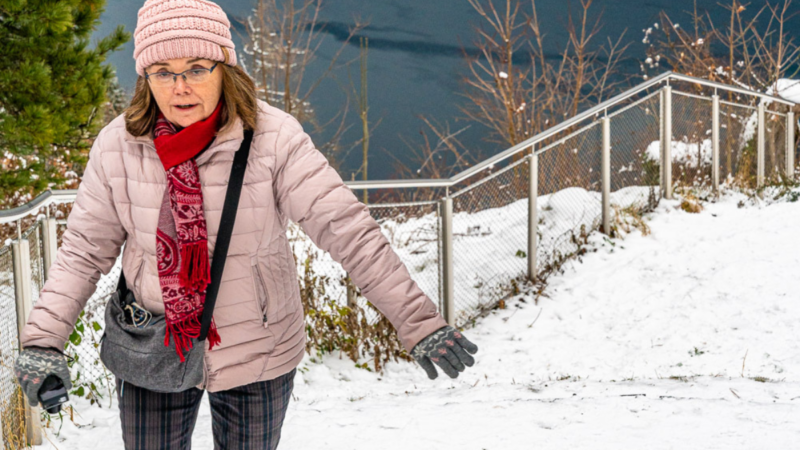
In crowds, I can pull the bag around to the front or put it on my lap and keep a hand on it.
I also like some structure. If the bag is too slouchy, everything gets jumbled together and I have to dig for my phone, wallet, and camera.
There are plenty of structured crossbody styles out there, including bags from Dooney & Bourke. Whatever the brand, I’m more interested in whether the bag suits the way I travel: hands free, reasonably organized, and small enough that it doesn’t turn into portable storage.
What I Normally Carry
After years of traveling, I’ve learned that the bigger the bag, the more likely I am to fill it. Give me extra space, and sooner or later I’ll throw something in “just in case.” Then I’ll carry it around all day and never use it.
My basic day-trip bag is actually pretty small. My phone and wallet are the obvious starting points. The wallet has my cards and cash, but I also make a point of carrying a few loose coins in the local currency.
That habit comes from experience. Paid public restrooms still turn up in quite a few places, particularly in Europe and parts of Asia. More than once, Dan was off taking pictures with all the coins when I needed a restroom.
And sometimes I wanted to give something to a street performer without pulling out my wallet and sorting through bills.
Lesson learned. I carry my own coins now.
Beyond that, my day trip bag essentials include lipstick, a pen, Bonine for motion sickness, ibuprofen for headaches, wet wipes, and a couple of Band-Aids for random cuts and blisters. All in a clear zipper pouch, so nothing gets crushed, forgotten, or otherwise lost in the bag’s nether regions.
I don’t need to carry half the contents of my hotel room for a day trip. That’s about it for the permanent lineup.
The Day Determines What Else Goes in the Bag
My day trip bag setup doesn’t change much, but the extras definitely do, depending on where I’m headed.
If I’m going somewhere that requires my passport, obviously it comes with me. If it’s going to be hot and sunny, I’ll bring sunglasses and sunscreen, along with a crushable Panama hat that doesn’t take up much room.
If rain is expected, I bring a packable rain jacket. When the rain stops, I can stuff it back into its pouch and put it away.
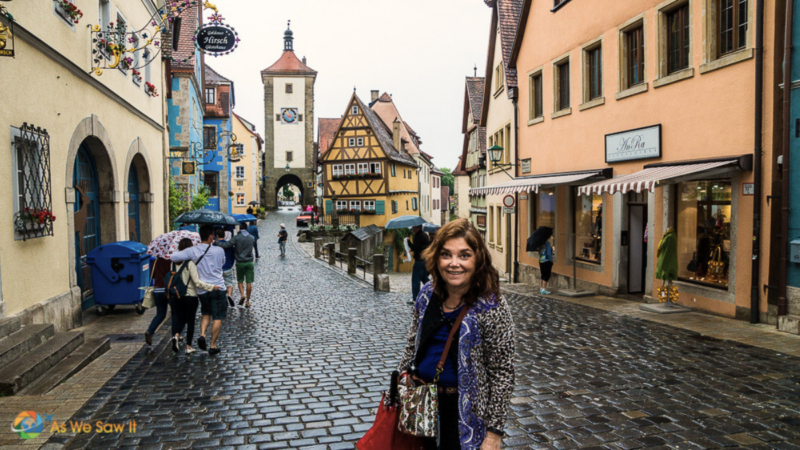
I may also bring a thin scarf, pashmina, or sweater for cold air conditioning or religious sites where I may need to cover up.
If I expect to be using my phone a lot that day, I may add a portable phone charger or a charging cable. It depends on whether I’ll be able to plug in somewhere or not.
If I expect to take a lot of photos, I may bring my small camera, a backup battery, and an extra memory card. Otherwise, I just rely on my phone.
Dan took a very different approach. He carried almost all his DSLR gear in his camera bag. It was so ridiculously heavy that he’d spend the day switching it from one shoulder to the other. Which is fine and all, but every now and then, he’d also accidentally hit me with it while we were walking.
All that to say, more gear isn’t necessarily better.
What I Leave Behind
If there’s one thing I’ve learned, it’s that “just in case” is how you end up carrying stuff you never touch.
Prime example: food. A snack and something to drink for the ride makes sense, but on most day trips I can buy more along the way. Obviously, a remote outing is different, but I don’t need to haul a day’s worth of food around with me.
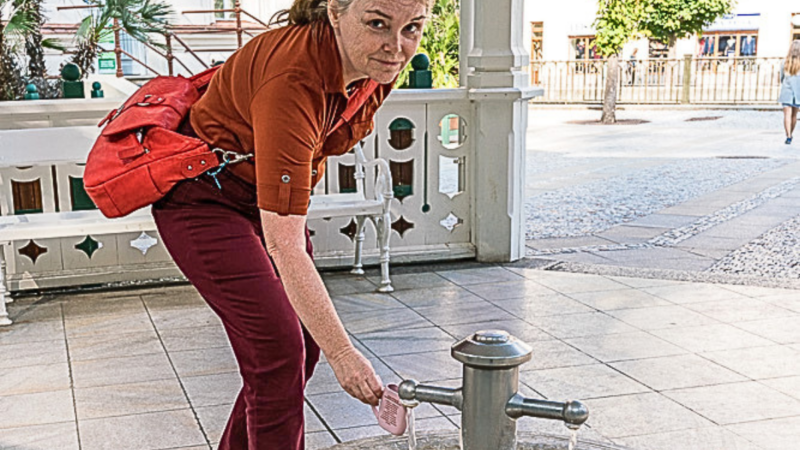
I also don’t see the point of enormous water bottles. Those things are bulky and heavy. Unless I’m going somewhere without stores or easy refills, I’d rather carry a small one and replenish along the way.
I don’t carry an umbrella, either. I’d rather take the packable rain jacket if rain is in the forecast. Not only does that keep my hands free, but I won’t have to deal with a dripping umbrella when I go inside.
Guidebooks generally stay behind too. I almost never read them while I’m actually out sightseeing. The only exception was when Dan and I did that walking tour of Savannah. But that’s because the book WAS the itinerary.
There’s a difference between being prepared and preparing for every possible disaster.
Pack for the Day You’re Having
The Paris backpack incident changed the kind of bag I prefer, but years of day trips have changed what I put inside it.
I want a bag that stays with me, leaves my hands free, and holds the things I actually need without encouraging me to carry a miniature survival kit.
Most days, that means my phone, wallet, coins, lipstick, a few basic medications, wet wipes, and blister care. Everything else depends on where I’m going, the weather, how I’m getting around, and what I’ll actually be doing.
Once I’m out for the day, I don’t want to think about my bag. I want to focus on the place I came to see.