
This guest contribution comes from Argentinian travel blogger Fernando Caíno, who recently completed a year-long Silk Road journey and is now sharing that experience on his blog, El Prisma de Fer. Morocco is another place he’s explored independently, and the route he followed there became the basis for this 10-day itinerary—with the stops, experiences, and practical choices he found most worthwhile along the way.
Morocco is a country that feels like a world within itself, where ancient medinas, golden deserts, snow-capped mountains, and coastal towns all blend into one unforgettable experience. In just a few hours, you can go from wandering through maze-like souks filled with the scent of spices to gazing at the endless dunes of the Sahara under a sky full of stars.
Whether it’s your first time in North Africa or you’ve already explored parts of the region, a 10-day trip to Morocco offers the perfect mix of culture, adventure, and relaxation. You’ll experience vibrant cities like Marrakech and Fes, travel through the High Atlas Mountains, cross cinematic desert landscapes, and wrap up your journey wherever your flight departs, maybe back in Marrakech, or up north in Rabat or Tangier.
I designed this itinerary to help you make the most of your visit—combining must-see highlights with authentic local experiences. Here’s how you can spend 10 unforgettable days exploring the best of Morocco.
Day 1–2: Discover Marrakech
Getting There & Travel Times
- Most international flights arrive directly into Marrakech (RAK).
- Getting from the airport into the medina usually takes about 20–25 minutes by taxi.
- Once you’re inside the medina, everything is walkable, though it can take 10–20 minutes to reach your riad depending on the alleys.

Most international travelers begin their Moroccan adventure in Marrakech, one of the country’s most vibrant and fascinating cities.
As soon as you arrive, you’ll feel the energy of the Red City, a blend of centuries-old traditions, vivid colors, and constant movement that makes it unlike anywhere else.
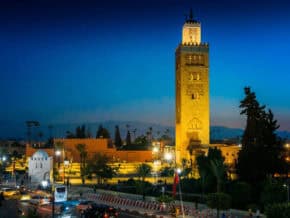
Start by exploring the Medina, a UNESCO World Heritage Site filled with narrow alleys, ancient walls, and markets that seem to stretch forever. You can visit the Koutoubia Mosque, an iconic landmark visible from almost every corner of the city, then wander toward the Jemaa el-Fnaa square, the beating heart of Marrakech.
During the day it’s a mix of fruit stalls and street performers, but it truly comes alive at night when hundreds of food stalls fill the air with the smell of grilled meats and spices, accompanied by live music and traditional rhythms.
Spend time getting lost in the souks, where you’ll find everything from handwoven rugs to brass lamps. Don’t hesitate to bargain, it’s part of the fun, but do it with a smile.
One of my favorite things to do here is simply watch the rhythm of daily life from a rooftop café with a glass of mint tea in hand.
For a break from all the chaos, you can visit the Jardin Majorelle, once owned by Yves Saint Laurent. The bright blue walls and exotic plants offer a peaceful escape from the busy streets. Another great stop is the Bahia Palace, known for its detailed mosaics and elegant courtyards that reflect the grandeur of Moroccan architecture.
If you have time in the evening, consider visiting a local hammam (bathhouse) to unwind after a long day of exploring. It’s both a cultural experience and a relaxing one, something that many travelers end up loving.
Marrakech has no shortage of beautiful riads, traditional guesthouses with central courtyards. Staying in one allows you to experience Moroccan hospitality up close.
Practical Tips for Your Time in Marrakech
- Where I Stayed: I recommend staying inside the medina, ideally in a riad within the souk, for an authentic experience of Marrakech’s energy. I stayed at Riad Dia, which was lively and very social.
- Where to Eat: Try the food stalls at Jemaa el-Fna Square at night, the atmosphere, the smells, and the live music are unforgettable. Also, grab a tagine or couscous at Café Des Épices in the heart of the souk.
- How I Planned It: I pre-booked my riad in Marrakech, but everything else I organized once I arrived.
- What I Missed: I regret not making time for Bahia Palace, and I also wish I would have tried a traditional hammam experience.
- Extra Advice: Bargaining is expected in the souks, it’s part of the culture, so enjoy it!
Day 3: Marrakech → Ouarzazate
via the High Atlas Mountains (Tizi n’Tichka Pass)
Getting There & Travel Times
- Marrakech → Ouarzazate: About 4–5 hours by CTM bus, depending on mountain traffic and stops over the Tizi n’Tichka Pass.
- Ouarzazate → Aït Ben Haddou: Roughly 30–40 minutes by taxi.

Leaving Marrakech behind, you’ll begin one of the most scenic journeys in Morocco, crossing the High Atlas Mountains on your way to the Sahara Desert.
It’s a long but incredibly scenic journey through shifting landscapes, much better if you break it up with one or two overnight stops on the way to Merzouga.
The road is full of dramatic views, winding through mountain passes, small Berber villages, and valleys that seem untouched by time.
The Tizi n’Tichka Pass and the Atlas Mountains
As you drive through the Tizi n’Tichka Pass, which reaches over 2,200 meters (7,200 feet) in altitude, you’ll see how the landscape changes from lush greenery to rocky slopes and desert tones.
It’s worth stopping at a few viewpoints along the way; the panoramas are simply breathtaking, and you’ll find small roadside stalls selling argan oil and various handmade crafts.
Aït Ben Haddou: A Step Back in Time
After lunch in Ouarzazate, stop at Aït Ben Haddou, a UNESCO World Heritage site and one of the most famous ksars (fortified villages) in Morocco. Built from clay and straw, it looks like something straight out of a movie, and in fact, it is. Scenes from Gladiator, Game of Thrones, and The Mummy were filmed here.
You can walk through its narrow passages and climb to the top for panoramic views of the Ounila Valley. Try to visit in the late afternoon when the sun turns the earthen walls deep shades of red and orange. It’s truly magical.
Planning Tips for the Tizi n’Tichka Pass and Ait Ben Haddou
- Where I stayed: I stayed overnight at Afgo Hostel in Ouarzazate.
- Where I ate: Ouarzazate has some good options, as does Aït Ben Haddou. If you spend the night nearby, many guesthouses in the area offer rooftop dinners with views of the ksar, a perfect way to end the day.
- How I got around: I booked a CTM bus to Ouarzazate. It was straightforward and comfortable enough for the distance. From there, you can take a taxi to Aït Ben Haddou and spend a few hours exploring the ancient mud-brick village.
- What I’d change next time: I’d plan more intentional stops along the way instead of pushing straight through.
- Extra notes: Pick up cash and snacks in Marrakech before leaving. ATMs can be scarce outside major towns.
💡PLANNING TIP: A simpler option for Days 3-6 is to book a Sahara Desert tour from Marrakech. Transportation, lodging, and some meals and activities are included. Some tours return to Marrakech, while others end in Fes. Always use established online platforms like Viator or Get Your Guide and read reviews before booking.
Day 4: Ouarzazate → Tinghir
Getting There & Travel Times
- Ouarzazate → Tinghir: Around 3–4 hours. You can take one of the passing buses that run along the main road toward the desert.

Continuing east, you can visit Tinghir, a small oasis town known for its palm groves and the impressive Todra Gorge. The cliffs rise to 300 meters (1,000 feet) high, creating one of the most striking landscapes in southern Morocco. It’s a great place to stretch your legs with a short hike or even try light climbing if you’re into adventure.
Walking along the river at the base of the gorge is refreshing after hours on the road, and there are plenty of cafés and small restaurants nearby where you can grab a tagine or fresh orange juice.
Planning Tips for Day 4
- Where I stayed: I stayed at Le Retour au Calme Maison d’Hôtes in Tinghir. It was quiet and ideal after a long travel day.
- Where I ate: I recommend eating at Restaurant & Camping Family El Mabrouk, a local Berber family house where the tagine was absolutely delicious. Just be sure to ask for the price before you order to avoid any surprises when you get the bill.
- How I got around: I arrived in Tinghir by bus, which is the most common way for travelers to reach the city. To get from the center to the Todra Gorge, I used a shared taxi. They run frequently along the road that connects the city with the gorge, making it an easy and affordable way to move around.
- What I’d change next time: I’d stay a couple of extra days in Tinghir. There’s much more to explore in the valleys and nearby villages.
Day 5: Tinghir → Merzouga (Sahara)
Getting There & Travel Times
- Tinghir → Merzouga: Usually 5–6 hours by local bus or shared taxi.
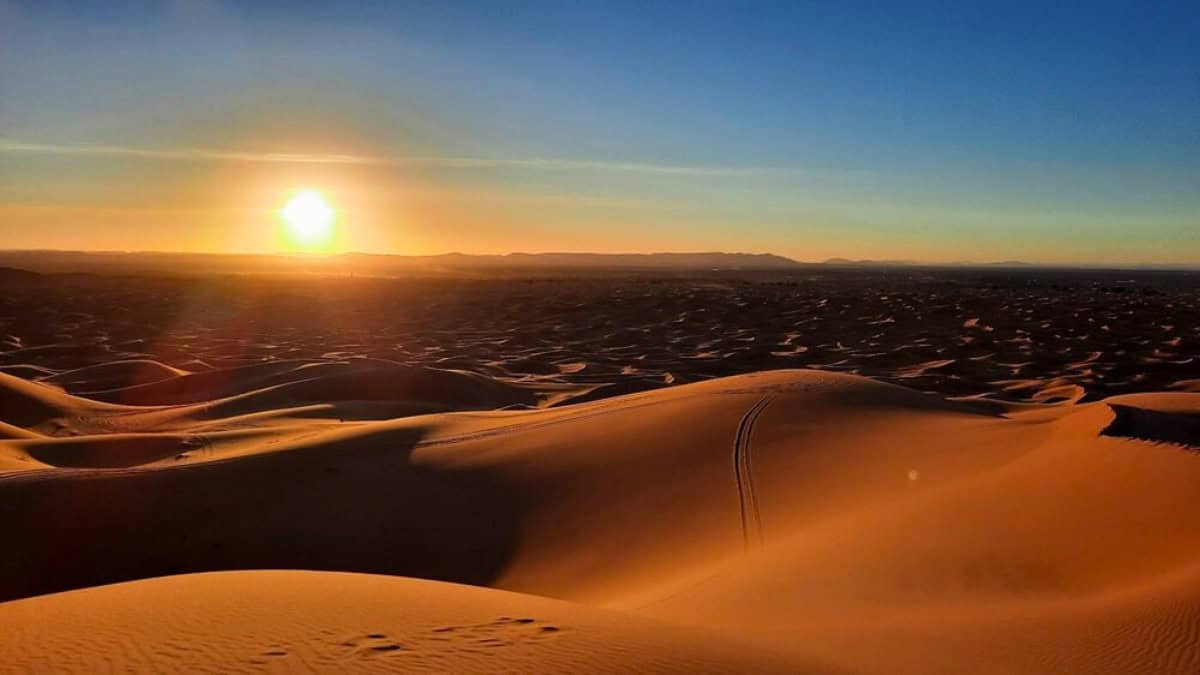
In the afternoon, you’ll arrive in Merzouga, the gateway to the Erg Chebbi dunes, some of the most beautiful in the Sahara. The moment you see those endless sand dunes, you’ll understand why so many travelers dream of this place.
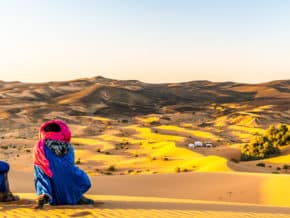
Here you can take a camel ride into the desert, just before sunset, and spend the night at a desert camp under the stars. Most camps include dinner, traditional music, and the chance to watch the sunrise over the dunes the next morning, an experience you’ll never forget.
If you prefer something a bit more comfortable, there are also luxury camps with proper beds and private bathrooms, but even the simpler options are charming.
Sahara Desert Planning Tips
- Where I stayed: I stayed one night at Camel Trek Bivouac, a family-run guesthouse with its own desert camp. and simple but warm hospitality. Their prices were very competitive and meals were included.
- Booking notes: I booked accommodations as I went since it was low season. In high season, it’s better to book ahead, especially in Merzouga.
- Extra notes: Bring warm clothes, desert nights can be freezing even if the days are hot.
Day 6: Merzouga → Fes
Getting There & Travel Times
- Merzouga → Fes: The night bus takes about 8–9 hours through the Ziz Valley and the Middle Atlas. Day travel with stops generally takes longer because towns are spread out and distances are long.
After waking up to a golden sunrise over the dunes, it’s time to say goodbye to the Sahara and begin your journey north toward Fes.
The route is long—an 8- to 9-hour drive—but it’s one of the most beautiful drives in Morocco. You’ll enjoy constantly changing scenery that makes every hour worthwhile.
By evening, you’ll arrive in Fes, one of the oldest and most culturally rich cities in Morocco. Compared to Marrakech, Fes feels more traditional and less touristy.
Fes is the spiritual and cultural heart of Morocco. The oldest part of the city is its medina, Fes el-Bali, a UNESCO World Heritage Site. It is one of the largest car-free urban areas in the world.
At first, the city can feel overwhelming, but it’s one of those places that grows on you the deeper you explore. The chaos slowly reveals a unique charm that makes the experience unforgettable.
Planning Tips for Visiting Fes
- Where I stayed: Stay inside the medina for an immersive experience. I stayed at Hostel Speakeasy Fes for two nights. It had great vibes and location and was near the blue gate.
- Where I ate: Skip the risky street stalls and eat at local restaurants instead. Prices are still very affordable. Try the pastilla, one of Fez’s specialties.
- How I got around: Fes is very walkable.
- Safety / navigation notes: Be cautious when walking alone through quiet alleys at night, the medina can feel like a maze and isn’t always the safest place after dark.
- What I recommend doing: Join a walking tour of Fez’s medina. The old city is packed with history and hidden corners that are easy to miss if no one explains them, a local guide really brings the place to life.
Day 7: Fes

Start your next day at the Bab Bou Jeloud Gate, recognizable by its blue mosaic tiles, and use it as your entry point into the old city.
The historic medina, Fes el-Bali, is a maze of narrow lanes where artisans still work much as they did centuries ago. With more than 9,000 alleys weaving through the medina, it’s a place where history feels alive at every turn.
Inside, you can visit the Al-Qarawiyyin Mosque and University, founded in the 9th century and considered one of the oldest universities in the world. While non-Muslim visitors can’t enter the mosque itself, you can still admire it from the nearby streets and feel the sense of history surrounding it.
Another highlight is the Chouara Tannery, where leather has been hand-dyed for centuries. From the viewing terraces, you can watch workers treating the hides in colorful stone vats, a scene that hasn’t changed much in hundreds of years. Be prepared for a strong smell, but it’s an unforgettable experience.
You can also visit Madrasa Bou Inania, a stunning example of Marinid architecture with beautifully carved wood and zellij tilework. Among all the chaos and noise of the medina, its courtyard offers a peaceful spot for reflection.
If you’re short on time, hiring a local guide can help you navigate the maze and understand the history behind each neighborhood and gate.
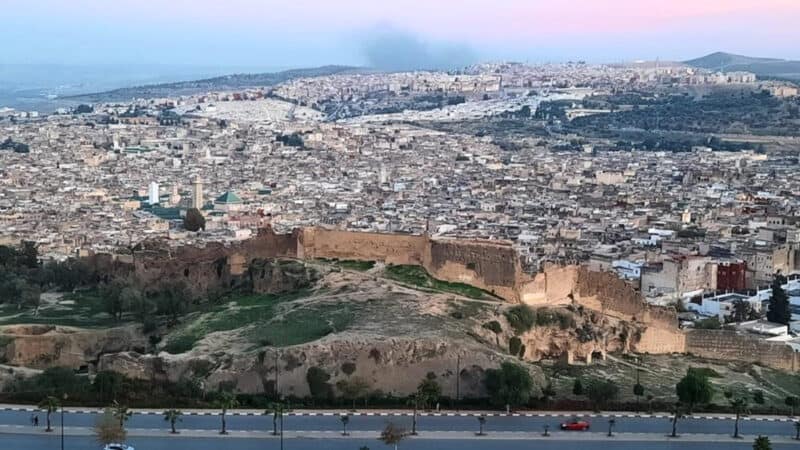
Head outside the city walls to reach the viewpoints overlooking Fez. From there, you’ll get an incredible panoramic view of the medina and its sea of rooftops, especially beautiful at sunset.
In the evening, you can have dinner at a rooftop restaurant overlooking the medina, hearing the call to prayer echo across the rooftops as the city lights up is a special way to end your day.
Day 8: Explore the Blue Charm of Chefchaouen
Getting There & Travel Times
- Fes → Chefchaouen: The CTM bus ride is about 4 hours and is the standard way to travel between the two cities.
- Once you arrive, most riads in the blue medina are a 10–15-minute walk from the bus station, but taxis are available if you don’t want to deal with the hills.

From Fes, you can take a 4-hour drive to Chefchaouen, one of the most photogenic towns in Morocco. Nestled in the Rif Mountains, this small city is famous for its blue-painted streets, which create a dreamlike atmosphere.
Every corner feels like a postcard. It’s a slower, more relaxed pace after the intensity of Fes.
You can spend the day simply wandering the medina, taking photos, and chatting with locals. There’s no rush here. The Kasbah Museum in the main square offers a small but interesting look at the town’s history, and from the Spanish Mosque, located on a nearby hill, you can enjoy the best panoramic view of the city, especially at sunset.
Chefchaouen is also a great place to shop for local crafts. The prices tend to be better than in Marrakech or Fes, and the artisans are usually more relaxed and open to friendly bargaining.
For food, try a tagine or couscous with mountain herbs, or a glass of freshly squeezed orange juice in one of the small cafés overlooking the alleys.
Planning Tips for Visiting Chefchaouen
- Where I stayed: Stay inside the blue medina for the full experience. I stayed at Hotel Souika, a simple but charming spot with a lovely terrace.
- Where I ate: For food, I recommend Restaurant Assaada for traditional Moroccan dishes and a terrace view.
- What I recommend doing: Spend time wandering without a plan, every corner is photogenic. If you’re up for some adventure, consider a two-day trek through the Rif Mountains to the Akchour Waterfall, the trail feels authentic and off the beaten path. But if hiking isn’t your thing, you can also join a day tour from Chefchaouen instead.
- Extra notes: Everything here I did spontaneously, it’s a slow, relaxing town, perfect for taking it easy. Bring cash, few places accept cards.
Day 9–10: Wrapping Up Your Moroccan Journey

After soaking in the peaceful atmosphere of Chefchaouen, your last two days in Morocco can go in several directions, depending on where your flight departs from or what you’d like to experience before heading home.
Option 1 – Head North to Tangier
Getting There & Travel Times
- Chefchaouen → Tangier: About 2.5 hours by bus or taxi.
- Tangier city center → airport: Usually 20–30 minutes by taxi.
If you’re flying out of Tangier, you can travel about 2.5 hours north from Chefchaouen. Tangier has a unique energy, shaped by its history as a crossroads between Africa and Europe.
You can stroll along the Corniche, visit the Kasbah Museum, and enjoy ocean views from the Café Hafa, a local institution where writers and musicians like the Rolling Stones once sat.
Tangier’s mix of Mediterranean and Atlantic vibes makes it a great place to spend your final day, especially if you’re catching a flight or ferry to Spain.
Option 2 – Travel South to Casablanca or Rabat
Getting There & Travel Times
- Chefchaouen → Rabat: Usually 5–6 hours by bus.
- Rabat → Casablanca: About 1–1.5 hours by train if you’re catching a connecting flight.
- Casablanca city center → Casablanca Airport (CMN): Around 35–45 minutes by train or taxi.
If your flight leaves from Casablanca or Rabat, plan for a longer travel day, around 6 to 7 hours by car or bus.
In Rabat, Morocco’s capital, you’ll find a more modern and organized city with wide boulevards and historical landmarks like the Hassan Tower and Kasbah of the Udayas. It’s calm and coastal, a good place to rest before your flight.
Casablanca, on the other hand, is Morocco’s economic center and home to the spectacular Hassan II Mosque, one of the largest in the world. Even if you’ve only got a few hours, this mosque is absolutely worth visiting; its size and seaside location are stunning.
Option 3 – Return to Marrakech
Getting There & Travel Times
- Chefchaouen → Marrakech: About 8–9 hours overland, usually with a connection in Fes, Rabat, or Casablanca.
- Marrakech city center → airport: Around 20–25 minutes by taxi.
If you’re looping back to Marrakech, expect a long drive of about 8–9 hours from Chefchaouen, so it’s best to spend the night in between or take a domestic flight if available.
Ending your journey where it began can feel full circle, maybe you’ll even revisit a favorite café or souk before heading to the airport.
Off-the-Beaten-Path Destinations in Morocco
If you have more than 10 days in Morocco, or you simply prefer exploring places beyond the classic tourist route, there are plenty of destinations that offer a slower pace and a more authentic feel. From coastal towns to mountain trails, these spots show a different side of the country, perfect for those who love nature, hiking, or discovering local culture away from the crowds.
Imlil and the Atlas Mountains – A Trekker’s Paradise

For mountain lovers, Imlil is the gateway to climb Mount Toubkal, the highest peak in North Africa (4,167 m / 13,671 ft). Located just 90 minutes from Marrakech, it’s the starting point for many hiking routes ranging from easy day walks to multi-day treks.
Even if you’re not planning to reach the top of Toubkal, the scenery around Imlil is breathtaking, green valleys, terraced fields, and traditional Berber villages where you can stay in family-run guesthouses.
If you enjoy trekking and local culture, spending a night or two in Imlil is a highlight. The cool mountain air and slower rhythm make it an excellent complement to Morocco’s desert and city landscapes.
Essaouira – The Laid-Back Coastal Escape
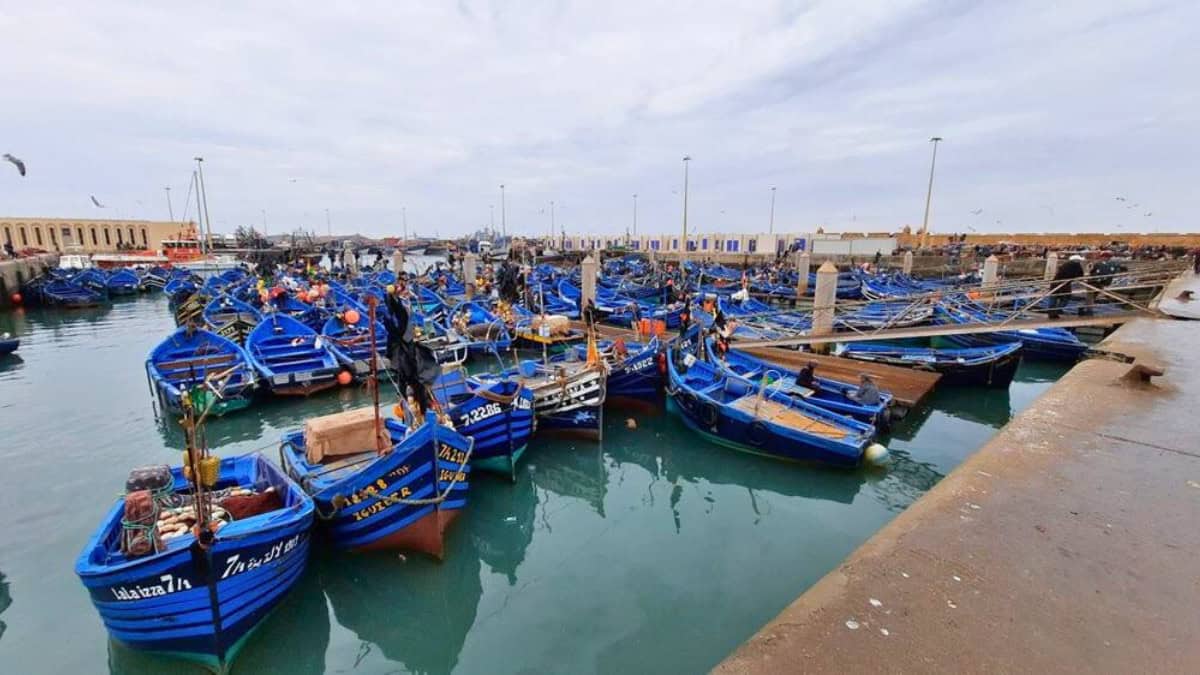
Just a few hours west of Marrakech, Essaouira is a charming seaside town that feels worlds apart from the chaos of the big cities. With its white-and-blue medina, ocean breeze, and relaxed vibe, it’s the perfect place to unwind.
You can walk along the historic ramparts, browse local art galleries, or watch fishermen bring in their daily catch at the port.
Furthermore, among the best things to do in Essaouira, don’t miss its beaches. The town is famous for kite surfing and windsurfing, thanks to its constant Atlantic breeze.
Agadir – Sun, Surf, and Relaxation
Further south, Agadir offers a completely different vibe. This modern coastal city is known for its long sandy beaches and sunny weather almost year-round. It’s ideal if you want to combine your trip with surfing, seafood, and seaside walks.
While it’s less historic than other Moroccan cities, Agadir makes a great base for day trips to Paradise Valley, a beautiful oasis with natural pools and palm trees tucked between rocky cliffs.
Zagora and Agafay Deserts: Quieter Alternatives to Merzouga
If you want to experience Morocco’s desert landscapes but avoid the long drive to Merzouga, there are other options that offer equally striking scenery with fewer crowds.

Click here to preview your posts with PRO themes ››
Zagora Desert
Located in the Draa Valley, Zagora is often called the “Gateway to the Sahara.” The dunes here are smaller than those in Merzouga, but the atmosphere is far more tranquil.
The journey from Marrakech passes through palm groves, ancient kasbahs, and the scenic Draa River valley, one of the most beautiful routes in southern Morocco.
Many travelers choose Zagora for shorter desert trips, camel rides, or overnight stays in traditional camps without venturing deep into the Sahara.
Agafay Desert
Only about an hour from Marrakech, the Agafay Desert is a rocky landscape of rolling hills and golden tones that feels worlds away from the city.
While it’s not a sand desert, its lunar scenery makes it a popular (yet still relatively quiet) spot for glamping, sunset dinners, and stargazing.
It’s a great alternative for those short on time who still want a taste of the desert’s magic.
How to Get Around in Morocco
The country has a solid transportation network that connects its major cities and tourist regions, so whether you prefer comfort, flexibility, or budget-friendly options, you’ll find a way that fits your travel style.
By Train
Trains are one of the most convenient and comfortable ways to travel between major cities like Casablanca, Rabat, Fes, and Marrakech.
- The ONCF railway system is reliable, affordable, and easy to navigate. You can choose between first- and second-class tickets. Both are safe, but first class offers assigned seating and air-conditioning.
- Morocco also has a high-speed train (Al Boraq) connecting Casablanca, Rabat, and Tangier in just over two hours.
For this itinerary, trains are mostly useful before or after the main loop. Once you leave Marrakech for the Atlas Mountains, Tinghir, Merzouga, and Chefchaouen, there are no train routes—those legs are done by bus, shared taxi, or tour.
But if you end your trip in Rabat, Casablanca, or Tangier, trains are the easiest way to move between those big cities or reach your departing airport.
By Bus
For routes not covered by trains, such as going to Chefchaouen, Merzouga, or the Atlas Mountains, long-distance buses are your best option.
Companies like CTM and Supratours are the most reputable, offering modern buses and reliable schedules. It’s best to book your tickets a day in advance, especially during high season.
By Car or Private Driver
If you want more flexibility, renting a car or hiring a private driver gives you the freedom to stop wherever you like.
Roads are generally in good condition, though driving through mountain passes or busy medinas can be challenging.
A private driver is more expensive but ideal if you’re traveling in a small group and want to maximize your time, especially for the desert route from Marrakech to Merzouga.
You’ll also see large, shared cars or vans that operate between towns. These Grand Taxis leave once full and can be a fun local experience, though comfort levels vary.
They’re best for short distances or when buses aren’t available.
Inside the Cities
In cities like Marrakech and Fes, most of the old medinas are car-free, so walking is the best (and often only) way to explore. For longer distances, you can use Petit Taxis, which are small, inexpensive city cabs. Always make sure the driver uses the meter or agrees on the fare beforehand.
Some cities also have local buses and, in Casablanca, even a modern tram system. But honestly, for short stays, taxis and walking are usually the simplest options.
Best Time to Visit Morocco
The best time to visit Morocco is during spring (March to May) and autumn (September to November), when temperatures are mild and landscapes are at their most vibrant. These seasons are ideal for exploring cities like Marrakech and Fes, hiking in the Atlas Mountains, or visiting the Sahara without the extreme heat of summer.
If you travel in winter, expect chilly nights in the desert and snow in the mountains, but pleasant days along the coast. Summer can be very hot inland, though destinations like Essaouira or the Rif Mountains remain comfortable thanks to the Atlantic breeze.
Final Thoughts
Ten days in Morocco showed me how different each part of the country feels. One day I was getting lost in medinas, the next crossing mountain roads or talking with families in small towns, then finishing it all in the quiet of the Sahara under a sky full of stars. Moving between these places is what makes the trip interesting.
If you take your time, stay in local guesthouses, try the food stalls, and talk to the people you meet along the way, Morocco becomes one of those places you remember for a long time. I know I will, and it’s a country I’d happily visit again.
Inspired? Pin this post and share it with your friends!