
Hong Kong is one of those places where you could easily miss the best food if you don’t know what you’re looking at. A lot of traditional dishes hide in plain sight—you can walk past a shop selling silky tofu or Chinese century eggs and never realize you’ve just missed a classic.
To get a local’s take on what was actually worth trying, I booked a guided food tour early in my trip. While you can absolutely explore on your own, a tour is the quickest way to get your bearings, avoid wasting meals on average spots, and not stress about eating things you don’t recognize.
If you want to skip the guesswork, here is the exact experience I recommend:
👉 Looking for a highly rated Hong Kong food tour? This 3-hour street food tour includes more than 10 local dishes and has a 4.9/5 rating from 900+ reviews. It’s an easy way to sample a wide range of local specialties without having to work out where to go or what to order.
6 traditional Hong Kong foods to try
Some of the food in Hong Kong is definitely “different,” to put it mildly. But that’s part of the fun. Trying local dishes is one of the easiest ways to understand the culture—even if a few of them are strictly “try once” experiences!
These are some of the best—and most memorable—food items I tried while visiting Hong Kong, along with how much they sell for today. To help you budget, just divide prices by 8—the Hong Kong Dollar is pegged to the US Dollar at about 7.8 HKD to 1 USD.
1. Egg tart
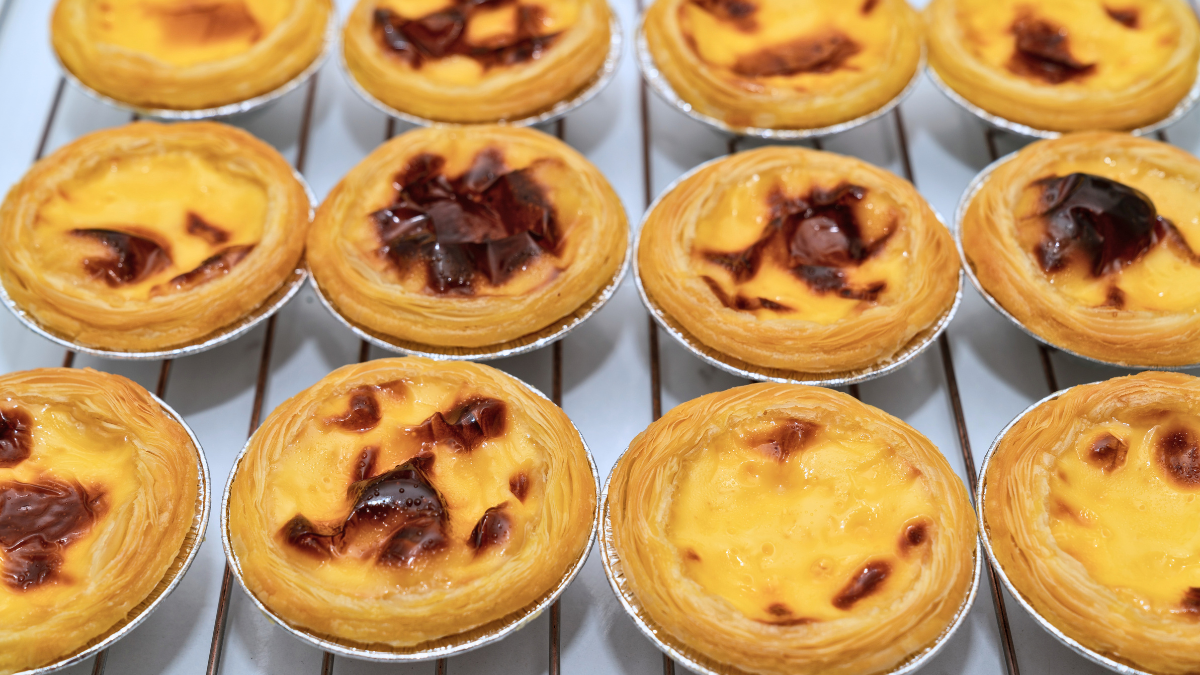
An egg tart is a small pastry rather than a main dish. It has a baked custard filling made from eggs and sugar inside either a flaky pastry or buttery shortcrust shell. Although the tart itself was tasty, the soft, slightly wobbly texture of the filling wasn’t my favorite.
Known locally as daan tat, Hong Kong-style egg tarts usually have a smooth, eggy custard and either a flaky or cookie-like crust. They’re different from the Portuguese-style egg tarts popular in nearby Macau, which have a flaky shell and a browned, caramelized top.
Egg tarts are one of Hong Kong’s classic treats and are sold throughout the day at local bakeries and cha chaan tengs (casual Hong Kong-style cafés). You’ll have no trouble finding one while exploring the city. They’re best eaten fresh and still warm.
💡 PRO TIP: Expect to pay about HK$10–15 for a classic egg tart at a local bakery; high-end hotel versions can cost significantly more.
2. Roasted goose with apricot sauce
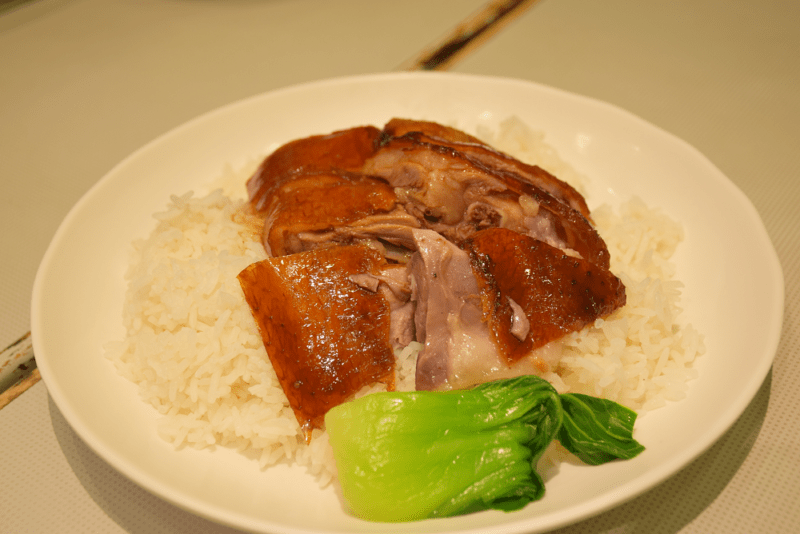
Roasted goose was my favorite of all the Hong Kong foods I tried! Goose is considered a fancier food item in Hong Kong, so it’s common for families to go out for goose for a celebration. Upper-class locals in Hong Kong will eat roasted goose more regularly.
Roasted goose tastes similar to duck to me. They roast it so that the skin is crunchy and salty. However, roasted goose is not found in street food stalls; you will have to go to a proper restaurant to try it. There are Roasted Goose restaurants everywhere in Hong Kong, but there are a couple tricks to picking a good one
- Pick a place with a butcher in the front window chopping goose nonstop. Hong Kong locals come in for whole birds, so the good places are always breaking down fresh goose. When the chopping never stops, it means the kitchen is roasting constantly and nothing is sitting under a heat lamp. Busy butcher = fresh goose. Quiet window = move on.
- Don’t let a long queue or no available tables stop you from eating there. The good goose places are always slammed. If every table is full and people are hovering for seats, that’s normal—it means the food is actually worth eating. Hong Kong service is fast, turnover is constant, and they clear tables like machines. You won’t wait as long as the line makes it look.
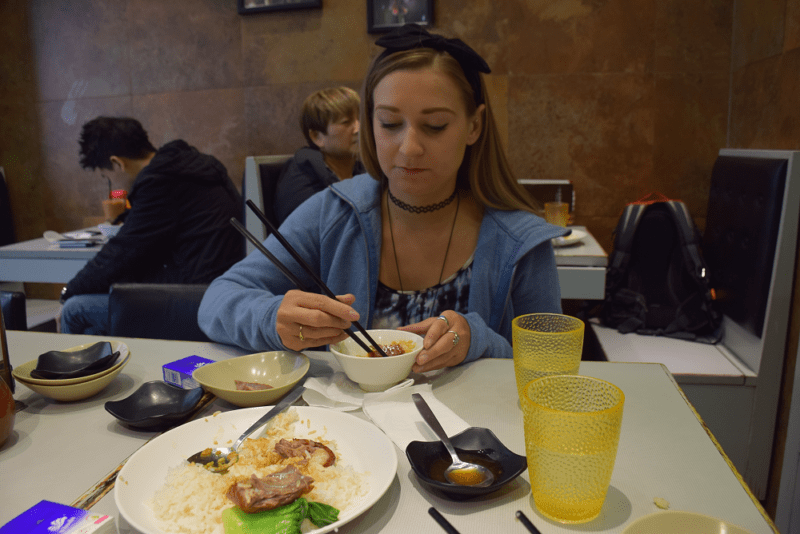
We had a particularly good experience at Chan Kee Roasted Goose in Mong Kok! I really enjoyed the roasted goose that they served, as it came with rice and apricot sauce. The sweet apricot sauce was a perfect match for the goose.
In fact, I liked the roasted goose so much while on the food tour that I had it twice more on my own before leaving Hong Kong!
💡 PRO TIP: Expect to pay roughly HK$65–90 for roast goose with rice at a casual shop. Famous or more upscale restaurants, especially goose leg portions, can run HK$110 or more.
3. Fish balls
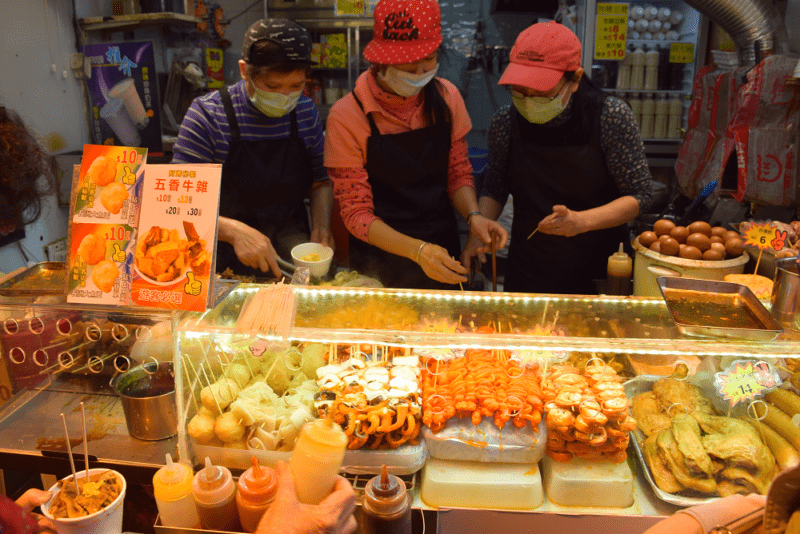
The name “fish balls” sounds slightly risqué, but they’re much less questionable than the name suggests. They’re made from fish paste mixed with starch and seasonings, then shaped into balls and cooked. Although they may look like meatballs, they have a smooth, firm, almost bouncy texture rather than a crumbly, meaty one.
Fish balls are a common street food in Hong Kong and are often eaten as a midday snack. The version I tried was deep-fried and served on a skewer. It had a mildly fishy taste, but I didn’t think there was anything particularly special about it beyond the unusual texture and presentation.
💡 PRO TIP: For the classic Hong Kong experience, buy fish balls from a street-food stall and eat them hot from the skewer. Expect to pay around HK$5–10 per skewer at local stalls; in busy tourist areas, prices can be slightly higher.
4. Dim sum
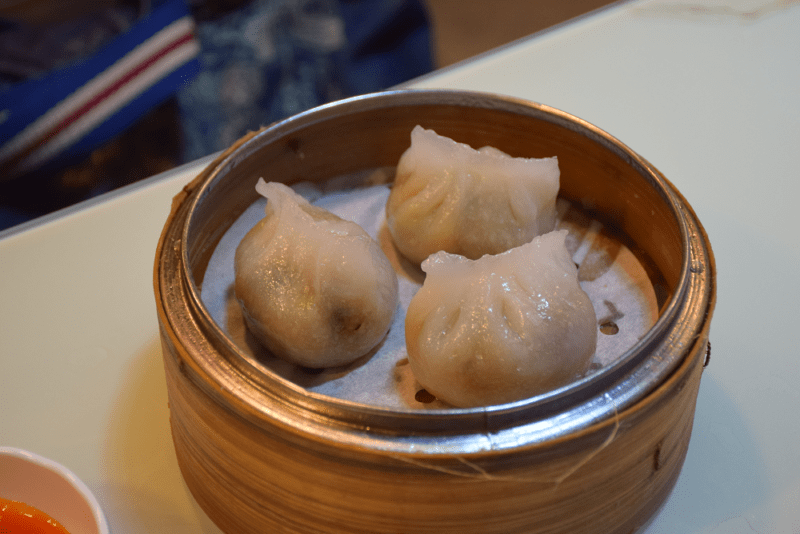
You can’t visit Hong Kong without trying dim sum, a style of Cantonese dining built around small plates meant to be shared. And it’s not just dumplings—spring rolls, steamed buns, rice rolls, wontons, and stuffed vegetables count, too.
Who knew that spring rolls were dim sum?!
Choosing what to try is the hardest part, which is why locals typically order several dishes for the table and share everything. It’s the perfect approach when you want to sample unfamiliar foods without committing to an entire plate of any one thing.
This Hong Kong food tour gave me the chance to try several varieties. I preferred the deep-fried dishes because some of the steamed ones were a little too slippery for my taste. The fried wontons were an easy favorite, and the deep-fried green peppers stuffed with seafood were amazing.
You’ll find an enormous variety of dim sum in Hong Kong, so I recommend visiting a restaurant rather than trying to choose individual dishes from street stalls. A restaurant with an English menu also makes it much easier to understand what you’re ordering.
💡 PRO TIP: Dim Dim Sum near Mong Kok MTR and Canton’s Dim Sum Expert are easy picks if you’re new to Hong Kong. They have English menus and lots of choice. Most dishes are around HK$20–35, with a few pricier specials.
5. Traditional tofu pudding
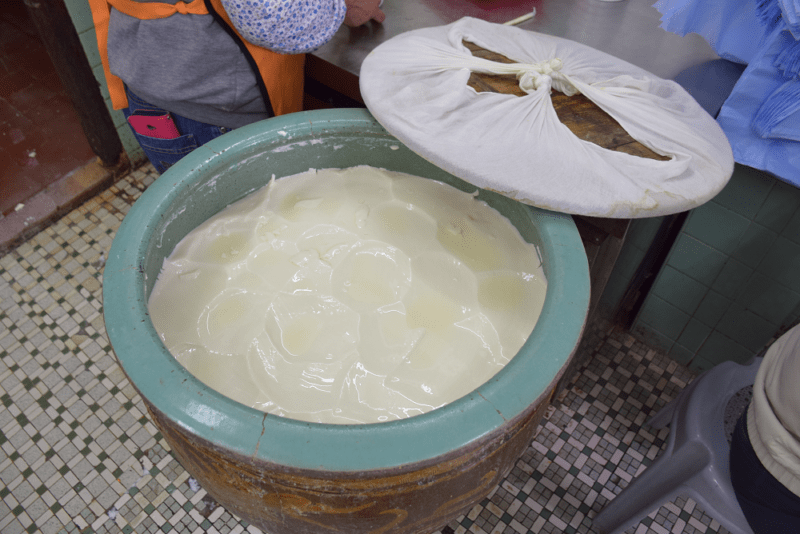
Tofu may be familiar in the Western world, but the version I tried in Hong Kong was completely different. Known as tofu fa, or tofu pudding, it is an extremely soft soybean curd traditionally served as a dessert. Mine arrived warm, with raw sugar sprinkled on top, and was eaten with a spoon.
Traditional tofu fa begins with soybeans that are ground to make fresh soy milk, sometimes using a stone mill. The soy milk is then set into a delicate curd with a silky, almost liquid consistency—the texture that makes this dish so popular in Hong Kong.
To me, it tasted like almost nothing, and the texture was a little too different. It was much softer and soupier than the tofu I was accustomed to. Nonetheless, the shop owner was clearly very proud of it and watched us closely as we ate, so I finished the entire bowl with a smile.
I wouldn’t say tofu pudding was one of my favorite foods on the tour, but it was worth trying simply because it was so different from the tofu I knew.
💡 PRO TIP: Kowloon has plenty of small, family‑run shops serving traditional tofu pudding, and Kung Wo Beancurd Factory in Sham Shui Po is a Michelin‑recommended local favorite. Expect to pay around HK$20–25 for a bowl.
6. Century egg pastry
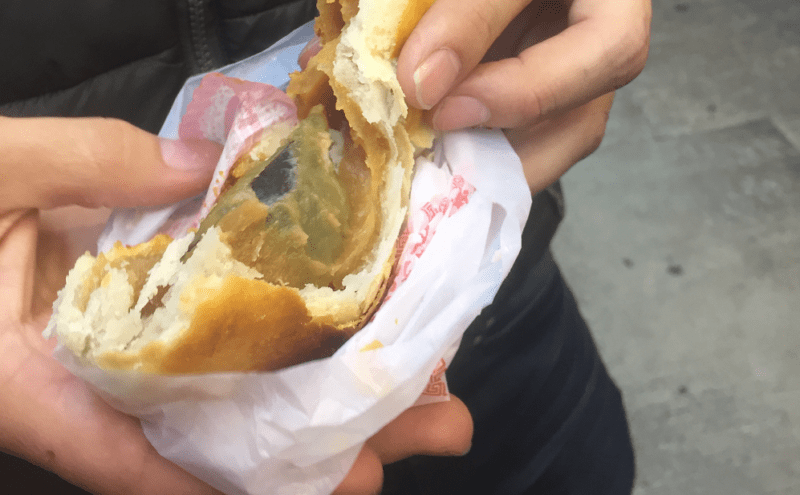
Last—and certainly my least favorite, although probably the most memorable—was the century egg pastry.
Despite the name, century eggs aren’t actually 100 years old. They’re preserved for several weeks or months in an alkaline mixture that transforms the egg white into a dark, gelatinous layer and gives the yolk a soft, creamy texture. The version I tried was baked inside a pastry.
I was in Hong Kong just before Chinese New Year, when these pastries were easy to find. It didn’t sound appetizing in the least, but I had to try one.
Unfortunately, my instincts were right. The pastry itself was normal and tasty, but the egg inside had the consistency of an avocado and tasted to me like a boiled egg with lime. It was strange and, although not completely repulsive, one tiny bite was enough. At least I can say I had tried it.
💡 PRO TIP: Expect to pay around HK$8–10 for a century egg pastry at a local bakery. Trendy or branded shops might charge a bit more for larger or fancier versions.
Was the Hong Kong Food Tour Worth It?
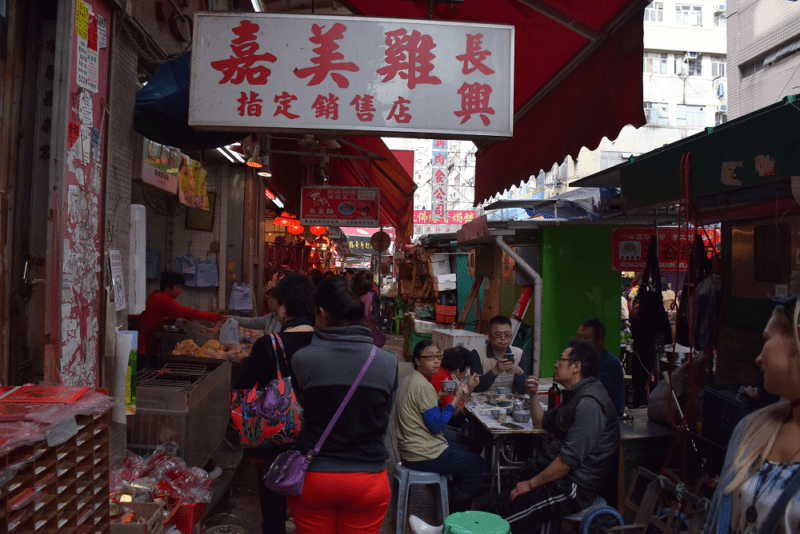
Short answer: Yes, a food tour in Hong Kong is worth it, especially if it’s your first visit. It saves you from ‘tourist traps,’ helps you navigate the language barrier, and introduces you to authentic local eats you’d likely walk right past.
I probably wouldn’t have tried some of these dishes on my own, and I certainly wouldn’t have known where to find the best versions without a local guide.
There’s a lot of great food here, but knowing where to go—and what to order—takes some trial and error. A food tour speeds that up. You get a range of local dishes, plus context on what you’re eating and why it’s popular with the locals.
I didn’t enjoy everything I tasted, but that wasn’t really the point. In a few hours, I tried a range of local foods and got a better sense of what I wanted to go back and eat again later in the trip.
The tour gave me a better understanding of Hong Kong’s food culture, introduced me to dishes I might otherwise have walked right past, and left me with a few favorites—as well as one or two foods I was perfectly happy to try only once.
For me, that made it one of the most memorable experiences of the entire trip.
Hong Kong Food Tour FAQs
Do you need cash for street food in Hong Kong?
Yes, you absolutely need cash for street food in Hong Kong. While malls and major restaurants accept credit cards, the vast majority of traditional street food stalls, open-air food stalls (dai pai dongs), and small family-run eateries only accept cash or Octopus cards. Always keep small Hong Kong Dollar (HKD) bills on hand for snacking.
Is a Hong Kong food tour suitable for picky eaters or vegetarians?
A standard Hong Kong food tour is generally not ideal for highly picky eaters or strict vegetarians. Classic Cantonese street food relies heavily on pork, seafood, and meat broths (like the century egg pastry or fish balls). If you have dietary restrictions, you should book a private, customizable tour or a dedicated vegetarian food tour instead.
When is the best time to take a food tour during a trip?
The best time to take a food tour is on your first or second day in Hong Kong. Booking a tour early in your trip helps you quickly overcome the local language barrier, learn how to navigate traditional menus, and gives you a curated list of favorite dishes to seek out and eat again before you leave.
How much walking is involved in a walking food tour?
Most Hong Kong walking food tours cover 1 to 2 miles (1.5 to 3 km) of walking. Because neighborhoods like Central and Sheung Wan are incredibly hilly and full of steep stairs, wearing supportive, comfortable walking shoes is essential.
Is it hard to eat gluten-free in Hong Kong?
Yes, eating gluten-free in Hong Kong is incredibly challenging. Traditional Cantonese street food relies heavily on soy sauce (which contains wheat), wheat-based egg noodles, and wheat starch wrappers for dim sum. Standard group food tours are generally not recommended if you have celiac disease or a severe wheat allergy.



Good note on the goose. Unless a place is busy and had folks working the place like mad I avoid it; if it is busy, with chefs getting after it, this means crazy customer turnover and fresh food, which means no time spent hunched over a toilet for 2 days after the meals LOL. Learned from 7 years of world travel in developing nations.
For sure, Ryan. Our #1 foodie tip is to look for a busy restaurant. And #2 is to find a restaurant away from the tourist spots. Those locals know who makes the best food.
Do you guys carry activated charcoal tablets in your travel arsenal? It’s an essential for purifying aquarium water; absorbs all sort of nastiness. We can’t begin to tell you how helpful it’s been when our tummies have felt a little “off.”