If you’ve only ever flown economy, business class can look absurdly overpriced. On a two-hour domestic hop, it usually is. Spending thousands extra to just so you can sit in a comfier seat for a couple of hours makes little sense.
But long-haul international flights are a completely different conversation.
Not because of the champagne or the fancy menus. It’s because spending ten hours folded into an economy seat gets a lot less appealing as you get older.
Being able to stretch out, raise your legs, change positions, and maybe even get some sleep can make a long-haul flight dramatically more enjoyable.
Not All Business Classes Are Created Equal
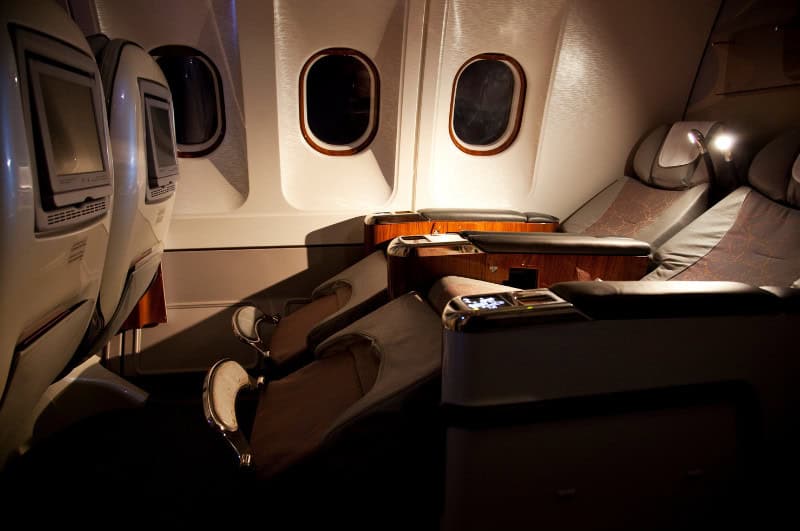
A lot of people hear “business class” and picture private suites, lie-flat beds, champagne, and enough room to do yoga in the aisle.
Sometimes that’s exactly what you get.
Other times, “business class” turns out to be a slightly wider seat, a better meal, and a blanket that probably isn’t worth getting excited about.
Domestic business class and long-haul international business class are often completely different products. Even within the same airline, the aircraft can make a huge difference.
Airlines are very good at marketing. Seat maps tend to be more honest. SeatGuru used to be my go-to for that, but these days, AeroLOPA tends to have more accurate and up-to-date seat maps.
The Airport Experience
Before you ever get on the plane, business class usually comes with a few perks that make travel days easier.
Instead of joining the longest check-in line in the terminal, you’ll usually have access to dedicated counters, priority boarding, and sometimes expedited security. You’ll also enjoy more generous baggage allowances and priority baggage handling.
While a better check-in experience may not be worth the extra ticket price, it can make the entire travel day noticeably less annoying. Especially when the airport is packed.
And then there are the lounges.
After spending years sitting in hard seats at crowded gates, I’ve come to appreciate lounges more than I expected. Not because they’re luxurious (which they often are), but because they make waiting for boarding time a lot easier to deal with.
Some lounges are little more than a quieter place to sit and drink free coffee. Others are nice enough that you’ll wish you’d arrived at the airport earlier—food buffets with sushi and adult drinks, hot showers, sleep pods, and massage chairs you’ll never want to leave.
Dedicated check-in counters, priority security, and lounge access won’t change the flight itself, but they can make the airport itself a lot less aggravating.
More Comfortable Seats and Sleep
This is where business class either earns its price tag or it doesn’t.
For a short daytime flight, a wider seat and a few extra inches of legroom are nice, but they’re not life changing.
An overnight international flight is a different story.
Try to sleep sitting upright for eight or ten hours and you’ll arrive tired, stiff, and questioning every life choice that led you there. Being able to lie flat and get a few hours of actual sleep can completely change the way a trip begins and ends.
That’s especially true on overnight flights to Europe. People booking business class flights to Milan, for example, aren’t paying for champagne. They’re paying for more personal space, a more comfortable seat, and a fighting chance at enjoying their first day in Italy instead of recovering from the flight.
Just don’t assume every business-class seat is the same. Some airlines offer private suites and direct aisle access. Others offer something that feels more like a large recliner with a nicer meal service attached. The aircraft matters just as much as the airline — sometimes more.
Better Food and Service
Honestly, I don’t think better food is the reason most people book business class. No airplane meal is thousands-of-dollars better.
The bigger difference is the service. Because the cabin is smaller, flight attendants have fewer passengers to take care of. Drinks arrive faster, meals don’t feel rushed, and the entire experience tends to feel calmer. On many international flights, adult drinks are included, and you won’t have to wait twenty minutes for the meal cart to reach your row.
The food and headphones are usually better, too. Sometimes much better. But I’d still put those well behind comfort and space on the list of reasons to book business class.
A Quieter Cabin
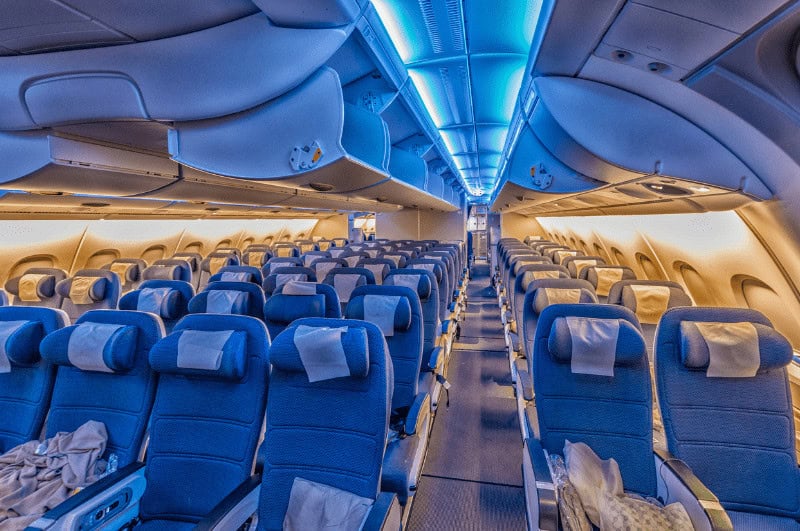
Economy cabins can get pretty chaotic on a long-haul flight. There are hundreds of people packed into a relatively small space, people are constantly getting up, overhead bins are opening and closing, and somebody always seems to be climbing over someone else.
Business class is usually much calmer.
Part of that comes from having fewer passengers in the cabin. Part of it comes from having more space between seats. There’s a lot to be said for being able to get up, stretch, and move around without disturbing everyone around you.
You also get more personal space and a little more privacy. On some airlines, that may even mean a divider between seats or a fully enclosed suite with a door.
Personally, I’d take a comfortable lie-flat seat over a fancy suite any day. Airlines love advertising doors and private pods, but being able to sleep comfortably is what actually matters on a long flight.
Before You Book Business Class
Airlines are very good at marketing. I’d look at the actual seat before spending the extra money.
Two business-class tickets at similar prices can deliver completely different experiences. One business-class ticket could get you a lie-flat bed with direct aisle access. Another might only give you a slightly wider seat that reclines a little farther than the economy version.
Seat maps tend to be more honest.
For years, SeatGuru was my go-to resource for comparing seats and cabin layouts, but it’s not nearly as reliable as it used to be. These days, I check AeroLOPA instead. The seat maps are precise, updated, and actually reflect what you’ll find onboard. When you’re spending that kind of money, it’s worth taking five minutes to verify what you’re really getting.
Final thoughts
When you strip away the marketing, the real difference between flying business class and economy is brutally simple: the seat.
The food? Nice.
The lounge? Nice.
The priority lane? Also, nice.
But none of that matters if you spend ten hours in a “business‑class” seat that’s basically an economy chair with a gym membership. What actually changes your trip is whether you can stretch out, sleep, and arrive feeling like a human instead of a pretzel.
Just don’t assume the words business class guarantee that experience. They don’t. Check the aircraft, check the seat map, and confirm the seat goes fully flat. That’s the real difference — not the label on the ticket, not the marketing photos, and definitely not the price tag.
Inspired? Pin this post and save it for later!