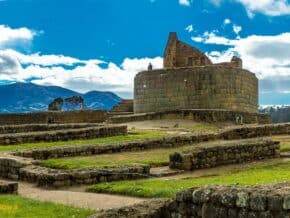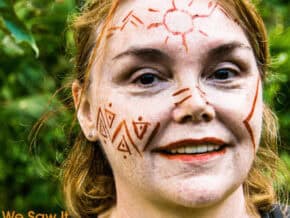
If you’re considering a trip to Peru, you will likely expect history to appear in museums or at major archaeological sites. That’s not where it stays.
You will discover ancient traditions woven into daily life — in local markets, early work routines, and small offerings placed quietly at street corners. These aren’t staged displays or preserved customs. They’re part of how everyday life still operates.
Ancient Andean traditions haven’t endured by standing still. They’ve adapted, remaining practical in how land is worked, how time is structured, and how communities make decisions. These practices function within modern Peru rather than sitting apart from it.
In Peru, ancient Andean traditions continue to shape everyday life, especially in the highlands.
Ancient Andean Traditions in Peru
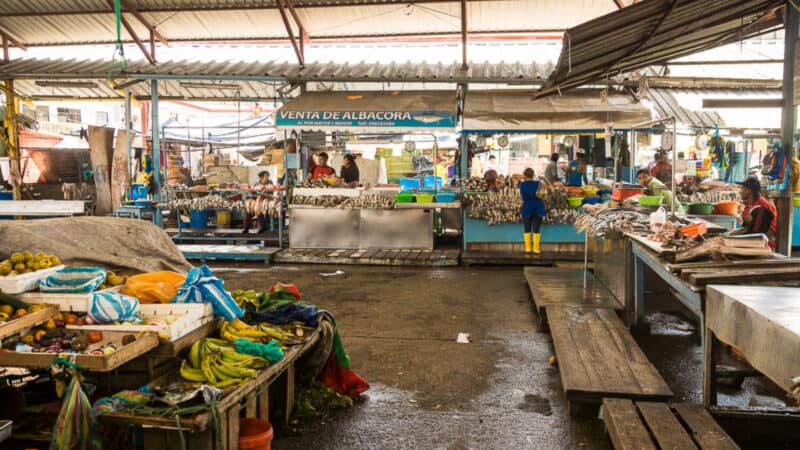
In many parts of Peru, daily routines are shaped less by clock time and more by environmental cues. Markets open early, work begins with the day, and decisions follow patterns that developed long before modern schedules existed.
Agricultural terraces still function as working systems, managing water, protecting soil, and creating usable farmland at high altitude. When crops are tended, the methods reflect generations of accumulated knowledge rather than written plans or modern techniques.
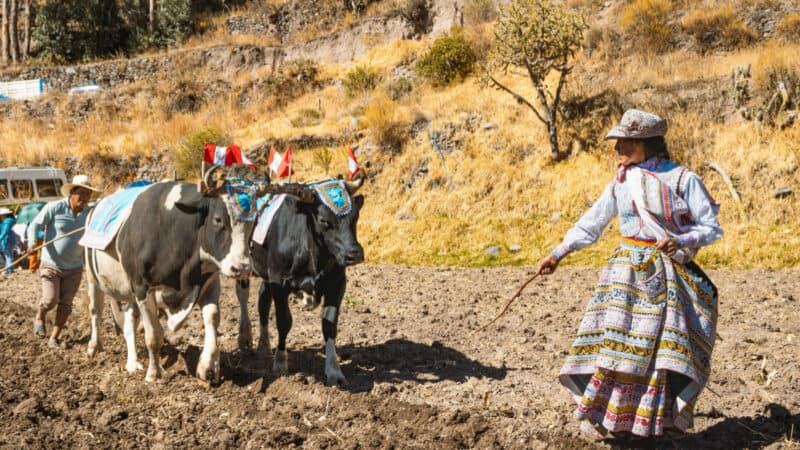
Work often remains communal. Planting and harvesting are shared responsibilities guided by seasonal cycles and local experience. Choices tend to prioritize balance and long-term sustainability over speed or maximum output, reflecting a practical relationship with land shaped by necessity.
Language reinforces this continuity. You will hear Quechua spoken in homes, markets, and community settings, carrying cultural memory through everyday conversation. Knowledge passes between generations through use and repetition rather than formal preservation.
Even in urban areas, these traditions adapt rather than disappear. You will encounter them in neighborhood celebrations, food practices, and religious observances that blend older Andean beliefs with newer influences. Tradition here does not sit apart from modern life. It continues alongside it.
Textiles and Weaving Traditions
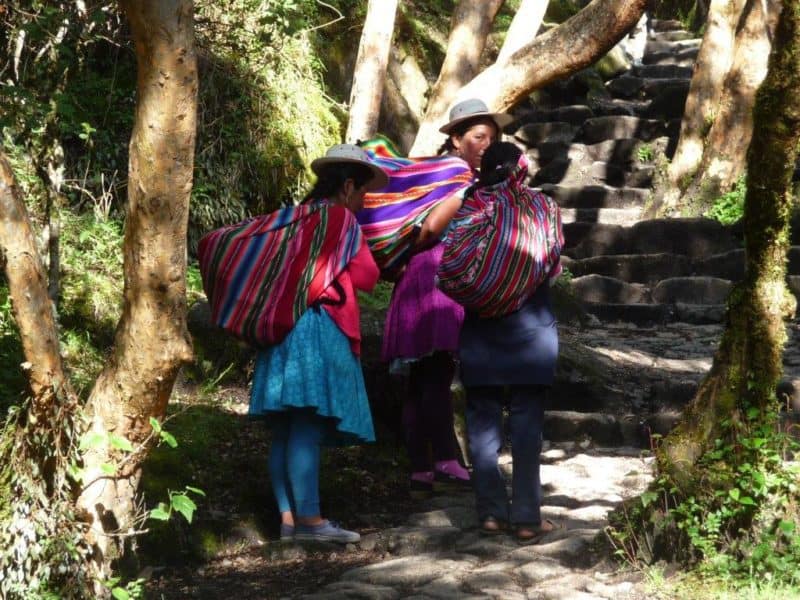
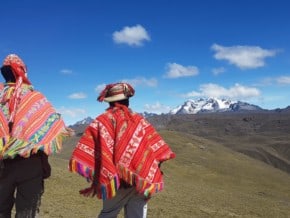
Textiles are one of the most visible ways ancient Andean traditions still operate in daily life. In many parts of the Andes, people wear traditional woven clothing every day, not just for festivals or ceremonies.
Patterns, colors, and techniques often function as a visual language. Designs can signal where someone comes from, community identity, or environmental ties, with symbolism drawn from landscape, animals, and belief systems embedded directly into the weave.
In places such as Chinchero, weaving remains a practical skill taught through observation and repetition. Techniques are passed down within families, with elders guiding younger weavers as patterns take shape. The process prioritizes accuracy and meaning over speed or volume.
Materials remain locally sourced. Wool is spun by hand, dyes come from plants, insects, and minerals, and looms follow designs that have changed little over generations. The result is clothing and textiles made to be worn and used, not displayed.
Markets and cooperatives provide modern outlets for these textiles, but the tradition itself remains intact. You will still see weaving practiced as part of everyday life, adapting to contemporary demand while retaining its cultural function.
Festivals That Keep Ancient Andean Beliefs Alive
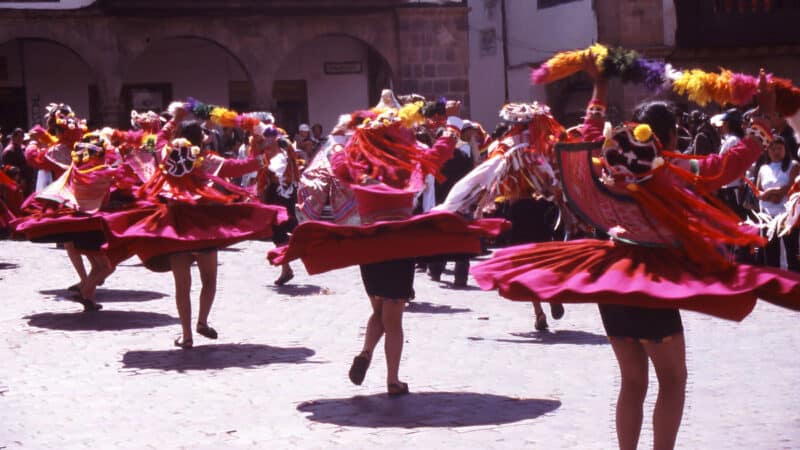
Festivals in Peru are not staged events set apart from daily life. You will encounter them as extensions of how communities already operate, shaped by season, place, and long-established rhythms.
Many festivals follow agricultural cycles rather than fixed calendar dates. Timing is tied to planting, harvests, and celestial markers, which is why celebrations can shift from year to year and vary by region. This reflects practical knowledge tied to land and climate rather than symbolic tradition alone.
Large events such as Inti Raymi in Cusco follow ceremonial structures rooted in Inca tradition. Clothing, movement, and sequence are deliberate, passed down through historical record and community practice. While visitors attend, these festivals function first as expressions of local identity rather than performances created for an audience.
Smaller regional festivals tend to be less formal but more embedded in everyday life. Their dates are tied to local conditions such as agricultural cycles and seasonal timing rather than fixed calendar schedules. If this interests you, custom Peru holiday packages can be built around specific festival dates and locations.
Spiritual Traditions and Belief
n many Andean communities, spiritual practice is tied to how people relate to land, work, and risk rather than abstract belief. You will see this most clearly in practices associated with Pachamama, often described as “Mother Earth,” but understood locally as a reciprocal relationship rather than a deity.
Offerings are made before planting, construction, travel, or other activities that affect the land. These actions acknowledge dependence on environmental conditions that cannot be controlled, such as weather, soil, and seasonal cycles. The practice reinforces caution and responsibility rather than superstition.
Rituals follow established structures. Food, drink, coca leaves, and symbolic objects are arranged deliberately, guided by community knowledge passed down through use rather than formal instruction. The focus is practical: maintaining balance and avoiding disruption rather than seeking favor.
Traditional healing practices follow similar logic. Medicinal plants and ritual treatments are used to address physical and environmental stresses, often alongside modern medicine. Both systems operate together, serving different purposes without conflict.
Why These Traditions Still Matter in Modern Peru
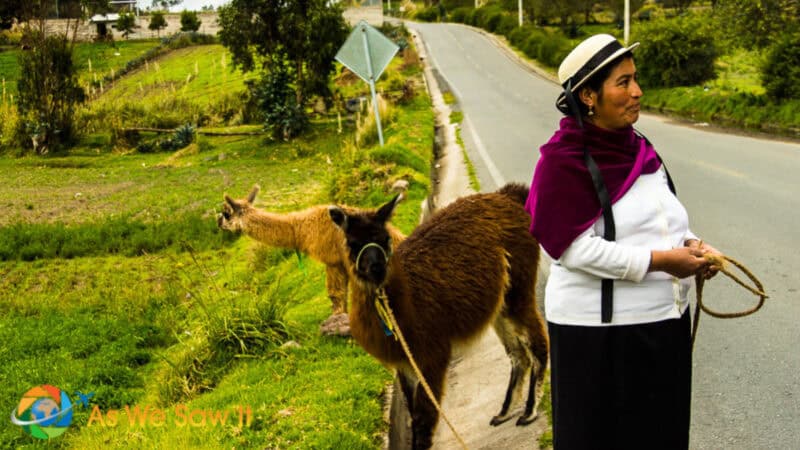
Ancient Andean traditions continue in Peru because they remain useful. They support cooperation, environmental awareness, and decision-making in environments shaped by altitude, climate, and seasonal change.
Modern life has altered how these traditions are practiced, but it hasn’t erased them. Migration, education, and technology influence daily routines, while long-established practices adapt rather than disappear. Festivals move into urban settings, textiles reach wider markets, and rituals adjust to new schedules.
What sustains these traditions is ongoing participation. They remain part of everyday life because communities continue to rely on them, not as preservation efforts, but as practical systems that still work.