
There’s no such thing as the “best place to stay” in Rio. It’s more that you have half a dozen ‘best’ options, and they all have different personalities.
Some put you right on the beach, others are closer to the historic center, and a few sit up in the hills above the city. They’re not interchangeable, and where you end up staying is going to affect your entire time there.
This guide breaks down the main areas so you can decide where to stay in Rio.
Centro: History and Architecture

If you want to understand how Rio became Rio, Centro is where you start. This downtown district is the oldest part of the city, and you can see that history everywhere you walk. You’ll find colonial-era churches alongside grand 19th-century theatres, ornate federal buildings, and narrow lanes that once connected a Portuguese imperial court to a busy Atlantic port. The Museu Histórico Nacional, the Paço Imperial, and the Mosteiro de São Bento are all within walking distance of each other here.
Guides who run private tours of Rio de Janeiro often start in Centro. It’s a good place to see how Rio grew from a colonial port into the city it is today, because many of the city’s oldest churches, museums, and public squares are located here.
Centro is also home to the Lapa arches—the iconic Arcos da Lapa aqueduct. The surrounding Lapa district has long been known for its samba bars and music venues, many of which stay busy late into the night.
During the week, Centro’s streets are busy with office workers and street vendors. On weekends much of the neighborhood quiets down, which can feel either peaceful or deserted depending on your frame of mind.
Staying here puts you close to public transit connections, which makes getting around the rest of the city straightforward. It suits travelers who are interested in history, architecture, and nightlife, and who don’t mind a neighborhood that shifts its character significantly between weekdays and weekends.
Santa Teresa: Arts and Old Rio Charm

Santa Teresa sits on a hillside above Centro, connected to the rest of the city by winding cobblestone streets and a historic tram line. Because it sits higher above the city, there’s often a welcome breeze compared with the hotter beach districts.
Artists and musicians have been drawn to Santa Teresa for decades, and it still gives off a bohemian vibe. You’ll see independent galleries, small guesthouses tucked into old colonial mansions, and laid-back restaurants that feel more neighborhood hangout than tourist stop.
The Museu Chácara do Céu, set in a modernist villa, houses an excellent collection of Brazilian modern art and has sweeping views over Guanabara Bay.
Santa Teresa suits travelers who want to feel like they’re living in Rio rather than just passing through. It’s a place that rewards wandering on foot. The trade-off is that reaching the beaches takes a little more effort, and the hillside streets can be tricky to navigate after dark.
Copacabana: Classic Beach Culture

Copacabana is the Rio most people picture. A long curve of sand, the black-and-white mosaic promenade, coconut vendors, and pickup football games on the beach—this is the stretch of coastline that helped make Rio famous worldwide.
The neighborhood also has more accommodation options than anywhere else in the city. You’ll find everything from budget hostels to major international hotels, often at lower prices than nearby Ipanema. Many hotels along Avenida Atlântica face the water directly, with views over the beach.
If you’re a first-time visitor who wants to stay close to the water and within easy reach of the city’s main sights, consider staying in Copacabana. It’s dense, busy, and sometimes chaotic, which many visitors find part of the appeal. The metro also makes it easy to reach Centro and other parts of the city.
Ipanema: Upscale Beach Life

A short walk from Copacabana, Ipanema feels a little more upscale. The beach is spectacular—one of the most beautiful urban beaches anywhere—and the neighborhood behind it is filled with boutiques, excellent restaurants, and lively bars.
The streets follow a simple grid, which makes the area easy to navigate on foot. On Sundays, the Feira Hippie market at Praça General Osório fills with art, crafts, and plenty of people-watching. The neighborhood also sits next to Lagoa Rodrigo de Freitas, a lagoon ringed by jogging paths and outdoor cafés.
Accommodation in Ipanema is mostly boutique hotels and higher-end rentals. It’s a good choice if you want a quieter, more residential atmosphere while still staying right by the beach.
Leblon: Rio’s Most Upscale Beach Neighborhood
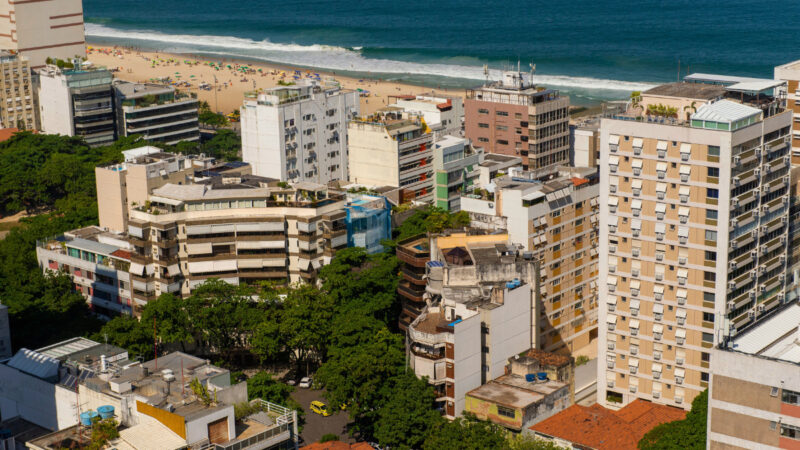
Next door to Ipanema, Leblon is widely considered Rio’s most upscale beach neighborhood. The beach here is just as beautiful, but the atmosphere tends to be quieter and more residential.
The streets behind the beach are filled with excellent restaurants, bakeries, and small boutiques. Many locals consider Leblon one of the best areas in the city for food, with everything from casual neighborhood spots to some of Rio’s top restaurants.
Accommodation here tends to be limited and expensive compared with Copacabana or even Ipanema. But if your budget allows, Leblon offers an appealing combination of beach access, walkability, and a more relaxed atmosphere.
Botafogo: Food, Nightlife, and Local Life

Botafogo has changed more in the past decade than almost any other neighborhood in Rio. What was once a quiet residential area between the beach and downtown has become one of the city’s most dynamic neighborhoods for eating and drinking. The Botafogo Praia Shopping mall helped anchor the waterfront, but it’s the streets behind it—particularly Rua Voluntários da Pátria and the surrounding blocks—where the real action is.
You’ll find some of Rio’s most interesting restaurants here, ranging from serious Brazilian cooking to international cuisine, alongside craft beer bars, cocktail lounges, and late-night venues that attract a young, local crowd. The neighborhood sits at the foot of Morro do Pasmado, which offers one of the best free viewpoints in the city—a direct line of sight to Sugarloaf Mountain across the bay.
Staying in Botafogo gives you a more authentic slice of Carioca daily life than the tourist-heavy beach neighborhoods. It’s also well-connected by metro, making it easy to get to Copacabana, Ipanema, and Centro without much hassle. For travelers who prioritize food, nightlife, and a sense of local rhythm over beach proximity, Botafogo is one of the best bets in the city.
Best Places to Stay in Rio for Carnival

If there’s one time of year when where you stay in Rio really matters, it’s Carnival. The city turns into a whirlwind of blocos—massive street parties that spill through the neighborhoods—and the legendary samba parades light up the Sambadrome.
We’ve found that staying in the beach districts makes life a lot easier. Copacabana and Ipanema are right in the thick of the action, packed with blocos and all kinds of places to stay—from simple flats to high-rise hotels with sea views. If it’s your first Carnival, this is where you’ll want to be.
Leblon, just beyond Ipanema, is great when you want to enjoy the energy without it keeping you up all night. It’s a touch more residential but still within walking distance of the fun.
And if the samba parades are your main goal, staying closer to Centro, in areas like Flamengo or Catete, makes getting to and from the Sambadrome much simpler. Late-night rides across Rio after the parades can be tricky, and here you’ll save time—and maybe your sanity.
Where Not to Stay in Rio: Areas to Avoid

Like any large city, Rio has areas where staying as a tourist presents real safety challenges. Some parts of the city are genuinely risky environments, especially for visitors who don’t know the local context.
The Zona Norte—the city’s northern zone—contains many of Rio’s largest favela complexes, including areas around Maré, Complexo do Alemão, and Penha. While these communities have their own rich cultural life, they are not suitable areas for tourist accommodation. Infrastructure is limited, access can be restricted due to ongoing security operations, and as a visitor unfamiliar with local dynamics, you’re likely to find yourself in situations you’re not equipped to navigate.
Parts of Centro itself, particularly around the bus terminals and certain blocks near the port, can be challenging at night. If you do stay in Centro, stick to established hotels in the core historic district and take taxis or rideshares after dark rather than walking unfamiliar streets.
The area around the Rodoviária Novo Rio bus station is worth mentioning specifically—it sees a high rate of petty crime targeting travelers with luggage. Even if you arrive by bus, get your transport sorted quickly and move on without lingering.
As a general rule, book accommodation in the South Zone (Zona Sul)—Copacabana, Ipanema, Leblon, Botafogo, Flamengo, Catete, or Centro’s historic core. These areas are where Rio’s tourist infrastructure is concentrated, where security awareness is higher, and where you’re more likely to have a straightforward and enjoyable stay.
Research your specific street before booking, read recent reviews mentioning safety, and ask your hotel or a local guide which areas to avoid at different times of day. Rio rewards the traveler who approaches it thoughtfully.
For many travelers, Rio is just one stop on a larger trip around Brazil. If you’re planning a longer visit, this two-week Brazil itinerary shows one way to combine Rio with several of the country’s other highlights.
Inspired? Pin this post and share it with your friends!